
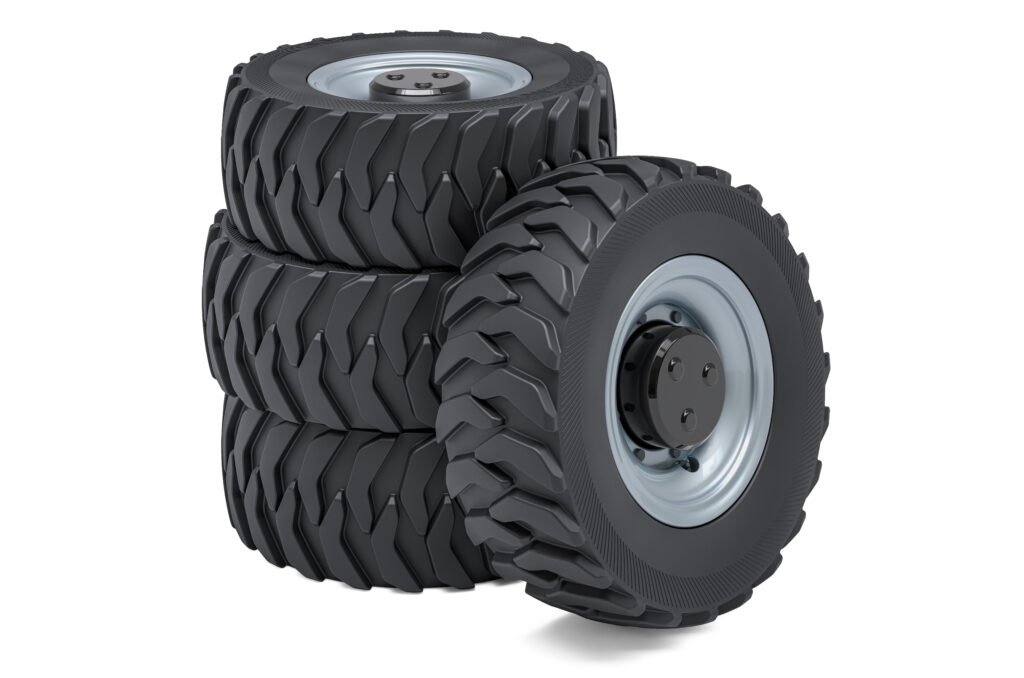
A forklift with a flat tyre, or one running on the wrong rubber altogether, doesn’t just create a maintenance call. It brings a section of your operation to a standstill. And in a busy warehouse, cold store, or manufacturing yard, that kind of standstill has a rand value attached to it — one that tends to be far higher than the cost of the tyre itself. ForknTire exists specifically to prevent that scenario: the right forklift tyre, for your specific machine and environment, without the runaround.
What most buyers find out the hard way is that forklift tyres aren’t all that interchangeable. Two tyres that look nearly identical on a shelf can perform very differently depending on the floor surface, the operating temperature, the load cycles, and the type of forklift they’re fitted to. Choosing a supplier who understands that distinction — rather than one who just ships whatever’s in stock — makes a real difference over the long run.
The Real Cost of Getting This Wrong
South African industry puts forklift fleets through their paces. Durban’s logistics yards, Gauteng’s manufacturing plants, the Western Cape’s agricultural supply chain — these aren’t light-duty environments. Forklifts in these settings run long shifts, on surfaces that range from polished epoxy floors to rough, uneven outdoor concrete. The tyre that works in one setting can fail embarrassingly fast in another.
Here’s something that doesn’t get said often enough: most premature forklift tyre failures aren’t caused by the tyre being defective. They’re caused by the wrong tyre being fitted in the first place. Tyres that wear out in two months instead of six, that crack in a cold store, that leave black marks across a freshly coated warehouse floor — these are almost always specification mismatches, not manufacturing defects.
A decent forklift tyre supplier catches that before the tyre goes on the machine. ForknTire‘s approach is to understand your operating conditions first. The product conversation follows from there.
Three Tyre Types — Knowing Which One You Actually Need
There are three main forklift tyre constructions in the South African market. Each has a context where it makes sense, and a context where it doesn’t. Here’s the practical breakdown.
Pneumatic Tyres
Air-filled, like a car tyre. They absorb vibration well and handle uneven ground better than any solid alternative. If your forklift operates outdoors — on a loading bay apron, a container yard, a construction site — pneumatics are generally the right starting point. The downside is punctures. On a floor with metal offcuts, nails, or debris, you’ll be dealing with flats more often than you’d like.
Solid (Press-on) Tyres
No air, no punctures. A solid rubber tyre bonded to a steel band, pressed directly onto the rim. These dominate in indoor warehouse environments for good reason — they’re virtually maintenance-free, they last well on smooth surfaces, and there’s no puncture risk from workshop debris. The trade-off is ride quality. On rough or uneven surfaces, solid tyres transfer a lot of vibration to the machine and the operator, which isn’t ideal for long shifts.
Cushion Tyres
Cushion tyres sit lower than pneumatics, which drops the forklift’s centre of gravity and tightens its turning radius. In a facility with narrow aisles and polished concrete floors, that matters quite a bit. They’re cost-effective in those conditions and tend to wear evenly when they’re matched to the right surface. Put them on rough outdoor ground, though, and they deteriorate quickly.
ForknTire carries all three types across the size ranges that cover most South African forklift fleets. If you’re not certain which type suits your operation, their team can help you work through it — see what’s available at forkntire.co.za.
What Actually Separates Good Suppliers from Average Ones
There’s no shortage of suppliers who’ll sell you a forklift tyre. The question is what you get beyond the product — because that’s where most of the value (or the frustration) lives.
Stock Depth and Turnaround
If the supplier needs two to three weeks to source a standard size for a Toyota or Hyster, your forklift sits idle for two to three weeks. That’s not a supplier problem in isolation — that’s a downtime problem with real costs attached. ForknTire keeps meaningful stock of high-demand sizes for the brands that dominate South African fleets: Toyota, Yale, Hyster, Linde, Komatsu, Doosan, and others. Common sizes move quickly; they plan for that.
Someone Who Knows the Product
Load ratings, rubber compound hardness, low-temperature performance, surface compatibility — these aren’t things most buyers know off the top of their heads, and they shouldn’t have to. But they do need a supplier who does. ForknTire’s team can talk through your specific application and point you at the right specification, not just the nearest available size. That kind of advice pays for itself in tyre life alone.
Delivery That Actually Reaches You
A supplier based in Johannesburg who can only deliver within a 50-kilometre radius isn’t much use to an operation in Richards Bay or Port Elizabeth. ForknTire supplies nationally, with delivery to major industrial centres across Gauteng, KwaZulu-Natal, the Western Cape, and the Eastern Cape. For larger orders, they can accommodate more remote sites too — worth discussing upfront when you place your order.
Pricing That’s Honest Upfront
Forklift tyre prices in South Africa vary, and the cheapest quote isn’t always what it seems once logistics costs and lead times are factored in. ForknTire‘s pricing is competitive and transparent — you know what you’re paying and what you’re getting. No surprises once the order’s been confirmed.
Why ForknTire Specifically
Most industrial suppliers carry forklift tyres as one product category among hundreds. ForknTire doesn’t. Forklift tyres are the whole business — which means the stock range, the technical knowledge, and the supplier relationships are all focused on one thing. That focus shows when you’re trying to source something specific or need advice on a less common specification.
The South African forklift market runs heavily on a handful of brands — Toyota above all, then Hyster, Yale, Linde, Komatsu, Clark, Doosan, and a few others. ForknTire’s product range is built around this reality, not around a generic global catalogue. Whether you’re fitting tyres on a Toyota 7FG25 in a retail DC or a Hyster H3.0FT on a container yard, the specification is something they’ve dealt with before.
Responsiveness is the other thing clients consistently mention. When a forklift goes down, you don’t want to be waiting on hold or chasing an email thread for three days. ForknTire’s service is built around quick turnaround — from first contact to delivery — because that’s the timeline that actually matters in a breakdown situation.
Different Environments, Different Requirements
South Africa’s industrial sector covers a wide range of operating environments, and the tyre decision changes meaningfully depending on where your forklift actually works.
Warehouses and Distribution Centres
Smooth sealed floors, tight turning radiuses, repetitive short cycles. Cushion or solid tyres are usually the right fit here. The main things to watch are compound hardness (softer compounds wear faster on abrasive surfaces) and whether the tyre leaves marks on finished floors — a real issue in facilities with coated or polished concrete.
Manufacturing Facilities
Factory floors are often inconsistent — sealed in some areas, painted in others, oil-contaminated in others. Solid tyres handle the puncture risk well. If your facility has floor grating, raised strips, or narrow clearances on older machines, check tyre width and rim fitment carefully before ordering.
Cold Stores and Food Processing
Temperature affects rubber compound behaviour more than most buyers realise. Standard solid tyres can become brittle below 5°C, which causes cracking and shortens tyre life significantly. ForknTire can advise on compounds formulated for low-temperature environments — a worthwhile conversation if your forklift spends most of its working day inside a cold store.
Outdoor Yards and Rough Terrain
Pneumatics are the default choice here, but compound selection still matters. Loose stone, aggregate, and rough unpaved surfaces are hard on soft rubber. ForknTire’s team can point you toward abrasion-resistant compound options that hold up better in these conditions and save you from premature replacement cycles.
Placing an Order — What You Need Ready
Ordering the right tyre is much easier if you have a few pieces of information on hand before you get in touch. The forklift make and model is the starting point. From there, the current tyre size — printed on the sidewall of the tyre already on the machine — confirms the fitment specification. Knowing your typical load range and operating surface helps with compound and construction recommendations.
If you’re not sure about the tyre size, a clear photograph of the tyre sidewall and the forklift model plate is usually enough for the ForknTire team to confirm the right replacement. They’ve handled enough fleet queries across enough different machine types to know exactly what they’re looking at. Get in touch via forkntire.co.za to start the conversation.
If you’re buying for a mixed fleet or want to set up a recurring supply arrangement, it’s worth mentioning that upfront. ForknTire can consolidate multi-specification orders and, for clients with regular requirements, discuss scheduled supply agreements that take the procurement admin off your plate.
Frequently Asked Questions
1. What forklift brands does ForknTire supply tyres for?
ForknTire covers tyres for the main brands operating in South African fleets — Toyota, Yale, Hyster, Linde, Komatsu, Doosan, Clark, and others. If you’ve got a less common make, contact them directly. They can usually source the specification with a reasonable lead time, even if it’s not standard stock.
2. How do I know if I need solid or pneumatic tyres?
The short version: indoor smooth floors favour solid or cushion tyres; outdoor or rough terrain favours pneumatics. But there are exceptions — cold environments, mixed-use yards, and specialist facilities all have their own variables. If you’re not certain, ForknTire’s team can work through it with you based on your actual operating conditions.
3. Does ForknTire deliver outside of Gauteng and KwaZulu-Natal?
ForknTire supplies nationally. They cover major industrial centres in the Western Cape and Eastern Cape as well. Delivery timelines vary by location — for remote industrial sites, discuss logistics when placing your order so there are no surprises.
4. How often should forklift tyres be replaced?
There’s no fixed interval that applies across all operations. Solid tyres in a standard warehouse environment typically last between 4,000 and 6,000 operating hours, but high-cycle operations on abrasive surfaces can cut that significantly. The most reliable approach is regular physical inspection: flat spots, cracking, chunking, or wear depth at or below the wear indicator line all point to a tyre that’s due for replacement.
5. Can ForknTire handle a mixed-fleet tyre order?
Yes — if you’re running multiple forklift makes with different tyre specifications, ForknTire can supply across those specifications in a single order. It keeps your procurement simpler and means you have one supplier accountable for your full forklift tyre requirement, rather than chasing three or four.
The Short Version
Forklift tyre procurement isn’t complicated, but it does reward some care. The right tyre for your environment lasts longer, causes fewer unplanned stoppages, and costs less per operating hour than a cheaper option that wears out in half the time. The wrong supplier adds delays, inconsistency, and the kind of back-and-forth that nobody has time for.
ForknTire is built specifically for this market. South African operations, South African forklift fleets, and the kind of no-nonsense service that gets your machine back in operation without a drawn-out procurement process. If you’re due for a tyre replacement or want to review your current supply arrangement, get in touch with the ForknTire team and get it sorted.