
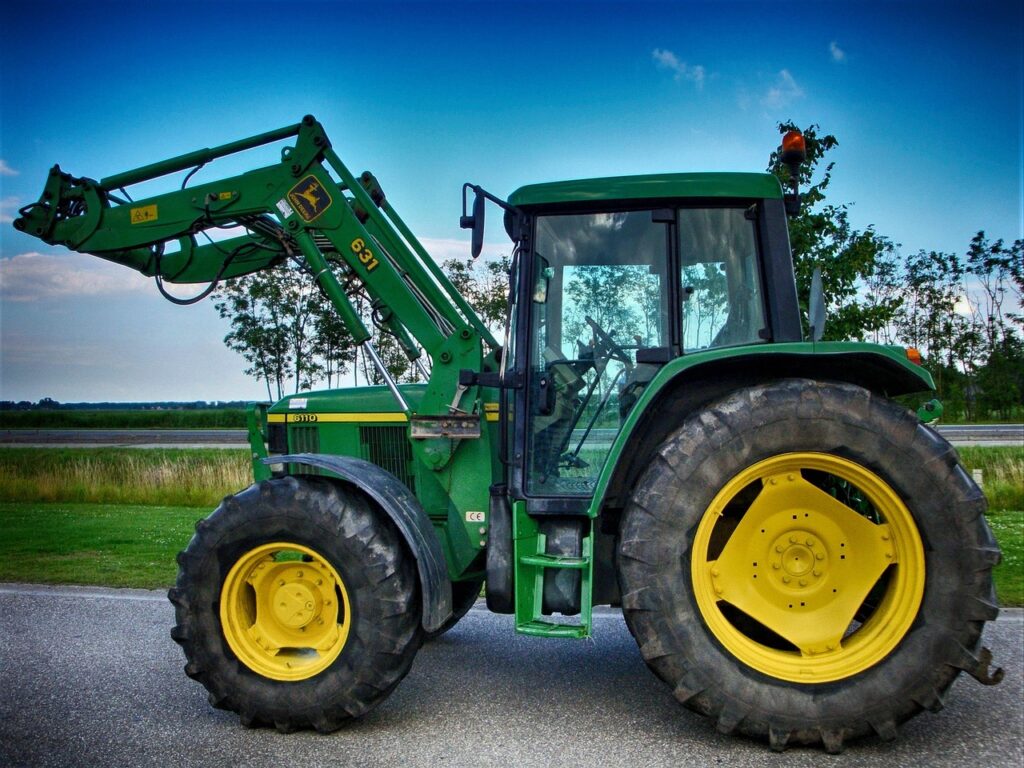
Operating forestry equipment across South Africa’s diverse terrain—from the coastal forests of the Eastern Cape to the plantation pine in Mpumalanga—demands tyres that can handle absolutely everything. When you’re running John Deere logger tires on your skidders, feller bunchers, or forwarders, you’re making a decision that affects productivity, safety, and your bottom line every single day.
At ForknTire, we’ve been supplying industrial and agricultural tyres to operations across South Africa since 2000. We’ve seen first-hand how the right forestry tyres transform operations, and how the wrong ones create endless headaches. Here’s everything you need to know about getting the most from your John Deere forestry equipment.
What Makes John Deere Logger Tires Different from Regular Heavy Equipment Tyres?
The short answer? They’re built for punishment that would destroy standard tyres in weeks.
John Deere logger tires aren’t just bigger versions of construction tyres. They’re engineered specifically for the unique stresses of forestry work—dragging tonnes of timber through mud, navigating over stumps and rocks, and maintaining traction on slopes that would make a mountain goat nervous.
The construction tells the story. Most quality forestry tyres feature steel-belted carcasses with multiple reinforced plies. We’re talking about 16-ply, 20-ply, sometimes even higher ratings for the heaviest skidders. The rubber compounds themselves are formulated to resist the chunking and tearing that happens when you’re constantly rolling over sharp branches and debris.
The tread patterns are another giveaway. Those deep, aggressive lugs you see on logger tyres? They’re typically angled between 23 and 35 degrees to balance traction with self-cleaning properties. When you’re working in the clay-heavy soils around places like Sabie or George, self-cleaning matters. A tyre that packs with mud loses traction fast, and cleaning them out manually during a shift wastes valuable time.
We stock tyres for the full range of John Deere forestry equipment—from the 648 series skidders running 30.5 tyres to the larger 748 models that need 35.5s. The sidewalls on these are reinforced to prevent the rim slippage that can happen when you’re pulling heavy loads on steep grades. That’s not a feature you get with standard agricultural or industrial tyres.
How Do You Choose Between Flotation and Standard Logger Tyres for Your Skidder?
This question comes up almost weekly at our Durban facility, and the answer depends entirely on where you’re working.
Standard John Deere logger tires with traditional lug patterns excel in mixed terrain. If you’re operating in areas with firm ground most of the time, maybe some seasonal wetness but nothing extreme, standard logger tyres give you excellent traction and durability. They’re typically the more economical choice, and for many operations in the drier inland areas, they’re perfect.
Flotation tyres are a different beast. They’re wider, run at lower pressures, and quite literally “float” on soft ground rather than sinking in. The contact patch is much larger, distributing weight over a greater area. For operations in the wetter coastal regions—think the forestry operations around Knysna, Tsitsikamma, or up in Mpumalanga during the rainy season—flotation tyres can be the difference between productive work and being stuck in the mud.
The trade-off? Flotation tyres cost more upfront. A set of 35.5 flotation tyres for a 748L skidder will set you back significantly more than standard logger tyres. But we’ve seen operations recoup that investment in reduced downtime and the ability to work through conditions that would otherwise shut them down.
There’s also a middle ground. Some operations run flotation on the rear of their skidders where the load concentrates, with standard logger tyres up front. This gives you better load distribution in soft conditions while keeping costs somewhat reasonable.
The soil type matters too. South Africa’s forestry areas have everything from sandy soils in parts of KZN to heavy clay in the Eastern Cape. Clay is the enemy of standard tyres in wet conditions—it’s slippery, it packs into treads, and it creates serious traction problems. That’s where flotation really shines.
What Tyre Sizes Fit John Deere’s Most Common Forestry Models?
Getting the sizing right matters more than you might think. The wrong size affects everything from ground clearance to gear ratios.
For the John Deere 640 and 648 series skidders, you’re typically looking at 30.5L-32 or 28L-26 sizes. These mid-range machines are workhorses in many South African operations, and John Deere logger tires in these sizes are something we keep good stock of at our Pinetown facility. The 30.5s in particular are popular because they offer a good balance of height and width without being so massive they become difficult to work with.
The 740 and 748 series step up to 35.5L-32 tyres. These larger skidders need the extra footprint to handle their increased power and load capacity. We’re talking about machines that can handle significantly heavier timber loads, and the tyres need to match that capability. The 35.5 size also helps with ground clearance over the larger obstacles these machines are expected to handle.
Forwarders and harvesters often run different sizes altogether. The John Deere forwarder models frequently use metric sizing like 600/55-26.5 or 710/45-26.5. These machines need excellent flotation because they’re carrying full loads of timber, sometimes over quite soft ground. The wider metric sizes help distribute that weight.
What many operators don’t realise is that you can sometimes run slightly different sizes front and rear, or even mix standard and flotation tyres strategically. We’ve helped several forestry operations optimise their tyre setups this way, matching the tyre specs to their specific terrain and working conditions.
One critical point: always check your John Deere manual for approved sizes. Running tyres that are too large or too small can void warranties and, more importantly, create safety issues. The engineers at John Deere specified those sizes for good reasons related to braking, stability, and driveline stress.
Should You Run Radial or Bias Ply Construction on John Deere Equipment?
This debate has been running in the forestry industry for years, and honestly, both types have their place.
Bias ply tyres are the traditional choice for forestry work. They’re tough, with multiple criss-crossing plies that create a very stiff, robust construction. When you hit a sharp stump or rock with a bias ply tyre, the entire sidewall helps absorb the impact. They’re generally less expensive than radials, and for many operations, they provide perfectly adequate service life.
The downside? Bias ply tyres run hotter, especially during road travel to and from worksites. They also tend to provide a rougher ride, which might not sound important until you consider operator fatigue over long shifts. We’ve had operators tell us that switching to radials made a noticeable difference in how they felt at the end of a 10-hour day.
Radial John Deere logger tires are the premium option. The radial construction allows the sidewall to flex more independently from the tread, which creates better ground contact and more uniform wear. In testing, quality radials can last three to four times longer than comparable bias ply tyres, especially if you’re doing significant road travel between sites.
The flex in radial sidewalls also provides better flotation in soft conditions and reduces soil compaction—something that’s become more important as environmental regulations tighten. The South African forestry industry is increasingly aware of minimising soil damage, and radials help with that.
Cost is the big consideration. A set of radial forestry tyres might cost two to three times what bias ply costs. For a single skidder, you’re looking at a significant investment. However, we’ve seen operations calculate that the longer life span and reduced fuel consumption (radials have less rolling resistance) makes them worthwhile over the long term.
There’s also casing value to consider. When your radials finally do wear out, the casings often have retread value. Last time I checked, you could get R3,000 to R5,000 per tyre casing credit on large radials. Bias ply casings typically have little to no retread value.
Our recommendation? For operations running newer John Deere equipment with substantial annual hours, radials make sense. For older equipment or operations on tight budgets, quality bias ply tyres still do the job well.
How Does Tire Pressure Affect Performance in South African Forestry Conditions?
Running the correct pressure in your John Deere logger tires is absolutely critical, yet it’s one of the most overlooked maintenance items we see.
Too high, and you’re reducing your contact patch, getting less traction, and creating a harder ride that beats up both tyres and equipment. Too low, and you’re risking sidewall damage, excessive heat buildup, and the dreaded rim slippage that can destroy a tyre in minutes.
The recommended pressures vary significantly based on whether you’re using standard or flotation tyres. Standard logger tyres typically run anywhere from 200 to 280 kPa (30-40 PSI), depending on the load and application. Flotation tyres, by design, run much lower—sometimes as low as 100-140 kPa (15-20 PSI). That lower pressure is what creates the larger footprint for better flotation.
But here’s what many operators don’t realise: the optimal pressure changes based on what you’re doing. If you’re hauling full loads through soft ground, you want to be on the lower end of the acceptable range to maximise flotation. If you’re driving empty on firmer roads, you can run higher pressures for better fuel economy and less tire heat.
South Africa’s temperature swings complicate matters. In Mpumalanga, you might start your morning shift at 5°C and hit 30°C by midday. Tyre pressure increases roughly 7 kPa for every 5.5°C rise in temperature. That morning cold pressure reading can climb significantly as the day heats up and the tyres warm from work.
The solution? Check pressures cold, first thing in the morning, every single day. It takes 10 minutes but prevents thousands in premature tyre wear and potential failures. We’ve seen operations lose entire tyres to sidewall failures that resulted from chronically low pressure—failures that cost R40,000 or more to fix when you factor in downtime and emergency callouts.
Investing in quality pressure gauges designed for large tyres is worth it. Those cheap garage gauges aren’t accurate enough for this work. We can point you toward proper commercial-grade gauges that’ll give you reliable readings.
What’s the Real Cost Difference Between Premium and Budget Logger Tyres?
This is where we need to have an honest conversation about value versus price.
You can find John Deere logger tires at wildly different price points. A budget 30.5 tyre might cost R15,000, while a premium brand could be R35,000 or more for the same size. That’s a massive difference, and for operations watching every rand, the temptation to go cheap is understandable.
But here’s what those numbers don’t show: the budget tyre might last 1,500 hours in tough conditions, while the premium tyre runs for 5,000 hours. Suddenly the math changes. The premium tyre costs R7 per hour of service. The cheap tyre? Over R10 per hour. And that’s before you factor in downtime, safety concerns, and the aggravation of changing tyres far more frequently.
We stock brands like Goodyear, Titan, BKT, and Alliance—established names in forestry tyres with proven track records. These manufacturers invest heavily in compounds that resist chunking and tearing, bead designs that prevent rim slippage, and construction techniques that extend service life. You’re paying for decades of engineering refinement.
Budget tyres often come from manufacturers with less forestry-specific experience. They might look similar on the surface, but the rubber compounds aren’t as cut-resistant, the steel belt package isn’t as robust, and the bead design is more prone to issues. We’ve had customers switch from budget to premium tyres and report immediate improvements in traction and handling.
There’s also the matter of availability. If you damage a premium brand tyre, we can usually source a replacement quickly through our distributor networks. Some budget brands? You might wait weeks for a replacement to arrive from overseas. In forestry, that downtime costs serious money.
Our position at ForknTire has always been straightforward: we’ll sell you whatever fits your budget and needs, but we’ll be honest about the trade-offs. For operations running equipment hard in demanding conditions, premium tyres are almost always the better investment. For lighter-duty work or equipment that’s nearing end-of-life, budget options can make sense.
How Do Forestry Tire Chains Work with John Deere Skidders?
Chains are a game-changer in certain conditions, but they’re not a universal solution.
When you’re working steep slopes or particularly icy conditions (yes, South African forestry operations in Mpumalanga and the Eastern Cape highlands do deal with ice), chains on your John Deere logger tires can be the difference between working safely and shutting down. They dramatically increase traction on both uphill pulls and downhill braking.
The challenge is that chains are hard on everything. They accelerate tyre wear, beat up drivelines, and create a rougher ride. They’re also not cheap—a set of quality forestry chains for a large skidder can run R50,000 or more. So you don’t want to use them unless you actually need them.
Most operations in South Africa that use chains do so seasonally or situationally. Winter operations in higher elevations might run chains during the coldest months. Operations working particularly steep ground might chain up for those specific areas, then remove them for flatter terrain.
There are different chain patterns designed for different purposes. Diamond pattern chains provide excellent all-around traction. Bar chains are simpler and less expensive but don’t give quite as much grip. Some operations run chains only on the rear tyres where they provide braking and pulling traction, saving the cost and wear of running them all around.
One tip we share with customers: if you’re going to use chains, invest in proper installation tools and train your operators on correct tensioning. Loose chains beat up tyres and can come off dangerously. Overtightened chains break under stress. Getting it right matters.
Also consider your tyre choice if you know you’ll be running chains regularly. Some tyre treads work better with chains than others. The Goodyear Logger Lug series, for example, is specifically designed to accommodate chains without premature lug damage.
What Warning Signs Indicate Your John Deere Tires Need Replacing?
Catching problems early can save you from catastrophic failures and the massive costs that come with them.
The obvious indicator is tread depth. Most John Deere logger tires start with tread depths around 45-50mm. When you’re down to 20mm or less, you’re in replacement territory. But don’t just eyeball it—actually measure with a tread depth gauge. We’ve seen operators convinced they had plenty of tread left who were shocked when we measured and found they were nearly worn through.
Uneven wear tells you something’s wrong. If the outside edges are wearing faster than the centre, you’re running too low pressure. If the centre wears faster, pressure is too high. If one side wears more than the other, you’ve got alignment issues that need addressing before you destroy another set of tyres.
Sidewall damage is more serious than many operators realise. Small cuts might seem harmless, but they can propagate through to the steel belts and cause catastrophic failures. Any cut that exposes the casing plies needs immediate attention. We can often repair minor sidewall damage if caught early, but once it’s compromised the structure, the tyre’s done.
Chunking in the tread is normal to some degree in forestry work—you’re going to lose some rubber chunks when you’re constantly hitting debris. But excessive chunking, particularly if chunks are coming out in large pieces, indicates either incorrect pressure, a compound not suited to your conditions, or possibly that you’re working terrain that’s too aggressive for that particular tyre.
Bulges or irregular shapes in the sidewall are a definite replacement signal. These indicate internal damage to the casing structure, usually from impact or severe rim slippage. A bulging tyre can fail suddenly and catastrophically. Don’t mess around with these—replace immediately.
Dry rot shows up as cracking in the sidewall rubber, particularly if equipment sits unused for extended periods. South Africa’s UV exposure accelerates this process. Tyres with significant dry rot have compromised structural integrity and should be replaced regardless of remaining tread depth.
We offer tyre inspection services at our facility, and for larger operations, we can come to your site. An experienced eye can often spot developing problems before they become emergencies.
Can You Mix Different Tire Brands and Models on the Same Machine?
Technically yes, but we strongly advise against it in most situations.
Mixing John Deere logger tires of different brands or models on the same axle creates several problems. First, they’ll almost certainly have different rolling circumferences, even if they’re nominally the same size. This creates drivetrain stress as the differential works to reconcile the different speeds. Over time, this accelerates wear on expensive driveline components.
Different tread patterns also provide different traction characteristics. If your left tyre is gripping well but your right isn’t, the machine wants to pull to one side. On level ground, this is annoying. On a slope, it’s dangerous. Operators unconsciously compensate for this, which creates fatigue and increases accident risk.
The compounds and construction also affect handling differently. One tyre might be softer and more flexible, the other stiffer. This creates unpredictable behaviour, especially in challenging terrain. We’ve heard from operators who mixed tyres and reported that their machines just didn’t “feel right” anymore.
Now, there are situations where mixing makes sense. If you damage one tyre and need an immediate replacement to keep working, using whatever’s available is better than sitting idle. Just understand that it’s a temporary solution. Plan to match the replacement properly as soon as practical.
Some operations intentionally run different specifications front and rear—flotation in back, standard in front, for example. That’s a different situation entirely and can be a smart strategy for certain applications. But they’re still matching pairs on each axle.
The best practice? When you replace tyres, replace in matched pairs at minimum, preferably in complete sets. This ensures even wear, predictable handling, and maximum equipment life. It’s more expensive upfront but cheaper in the long run when you factor in driveline repairs and the productivity losses from poor handling.
If budget constraints make complete replacement impossible, at least match the axle. Put your newest tyres on the rear of a skidder where they handle the pulling loads and wear hardest. Move the better of the old tyres to the front. This lets you extract maximum value from your tyre investment while maintaining reasonable performance.
How Does South Africa’s Terrain Affect John Deere Logger Tire Selection?
The diversity of South Africa’s forestry regions means there’s no one-size-fits-all tyre solution.
Coastal operations around George, Knysna, and the Eastern Cape face high rainfall, often working in muddy conditions for significant portions of the year. The soils tend to be heavier, with more clay content. For these areas, John Deere logger tires with aggressive self-cleaning tread patterns are essential. Flotation becomes very important during the wet season. We often recommend going with wider tyres or specifically designed high-flotation models for these regions.
Mpumalanga’s plantation forestry works in different conditions entirely. The terrain is more mountainous, with steeper grades that demand excellent traction for both pulling and braking. Soil conditions can vary from sandy to rocky depending on the specific area. Rocky areas like around Sabie and Graskop are murder on tyres—you need very robust construction with excellent cut and puncture resistance.
The inland areas of KwaZulu-Natal present yet another scenario. Generally drier than the coast, but still with seasonal rainfall that can turn certain areas into challenges. The terrain varies significantly—some operations work relatively flat ground, others deal with rolling hills. Tyre selection needs to match these varying demands.
What many operators don’t consider is altitude effects on tyre performance. Higher elevation operations (and South Africa has plenty) see greater temperature swings between day and night. This means more pressure fluctuation, more stress on tyre materials, and often accelerated aging of rubber compounds due to increased UV exposure.
Rocky substrates are particularly prevalent in parts of the Free State and Northern Cape where some forestry operations exist. These areas demand tyres with the highest level of penetration resistance—thick under-tread gauges, heavy-duty steel belt packages, and specialized compounds that resist cutting.
At ForknTire, we work with forestry operations across all these regions. We’ve learned that matching the tyre to the specific local conditions matters as much as matching it to the equipment. A tyre that performs brilliantly around George might struggle in Mpumalanga, and vice versa.
When you’re specifying tyres, be honest about your worst conditions, not your average ones. Size your tyre capabilities for the hardest days you face, not the easiest. The extra cost of tyres that can handle your toughest conditions pays for itself many times over in reduced downtime and failures.
What Maintenance Practices Extend the Life of Forestry Tires?
Proper maintenance can easily double the service life of your John Deere logger tires, which translates to massive cost savings.
Daily pressure checks are non-negotiable. We’ve said it before, but it bears repeating: more forestry tyres are destroyed by incorrect pressure than by any other single factor. Check cold, check consistently, and maintain a log. If you notice a tyre consistently losing pressure, investigate immediately. Small leaks become big problems.
Visual inspections should happen before every shift. Walk around the machine, looking for obvious damage, embedded objects (remove them if safe), and unusual wear patterns. Check the bead area where the tyre meets the rim—any indication of movement or slippage there needs immediate attention.
Cleaning sounds basic, but it matters. Mud, sap, and chemicals packed into tread grooves can accelerate rubber degradation. At shift end, a quick spray-down removes the bulk of accumulated material. You don’t need to detail-clean them, but getting the heavy accumulation off helps.
Rotation programmes extend even wear. If your operation allows it, rotating tyres between positions can help achieve more even wear across all positions. Front tyres on skidders often wear differently than rears. Swapping them strategically can add hundreds of hours to your overall tyre life.
Storage matters for spare tyres. Don’t leave them sitting in direct sun—UV degrades rubber compounds over time. Store them flat or hanging, not standing on the tread, to prevent deformation. If storing long-term, treat with a tyre dressing to prevent dry rot.
Address small issues immediately. That minor sidewall cut that doesn’t seem like a big deal? It can propagate into a major failure if left unattended. We can repair many minor issues if caught early, but once they’ve compromised the structural integrity, you’re looking at replacement.
Track your tyre performance. Keep records of when tyres were installed, their running hours, and any issues that develop. This data helps you make better purchasing decisions and can identify specific machines or operators that are particularly hard on tyres. Sometimes the problem isn’t the tyre—it’s how it’s being used.
Getting the Right Tires for Your Operation
Choosing the right John Deere logger tires for your forestry operation comes down to understanding your specific needs and matching them to the capabilities of different tyre options. There’s no universal “best” tyre—only the best tyre for your particular application, terrain, and budget.
At ForknTire, we’ve been helping South African forestry operations make these decisions since 2000. We stock a comprehensive range of forestry tyres from leading manufacturers, and our team has the experience to guide you toward the options that’ll deliver the best value for your specific situation.
Whether you’re running a single skidder operation in the Eastern Cape or managing a fleet across multiple provinces, we’re here to help. Our Pinetown facility serves forestry operators throughout KwaZulu-Natal and beyond, with the stock depth and technical knowledge to support even the most demanding operations.
Contact us today to discuss your forestry tyre needs. We’ll work with you to find solutions that keep your John Deere equipment working productively, safely, and efficiently—because in forestry, every hour of uptime matters.