
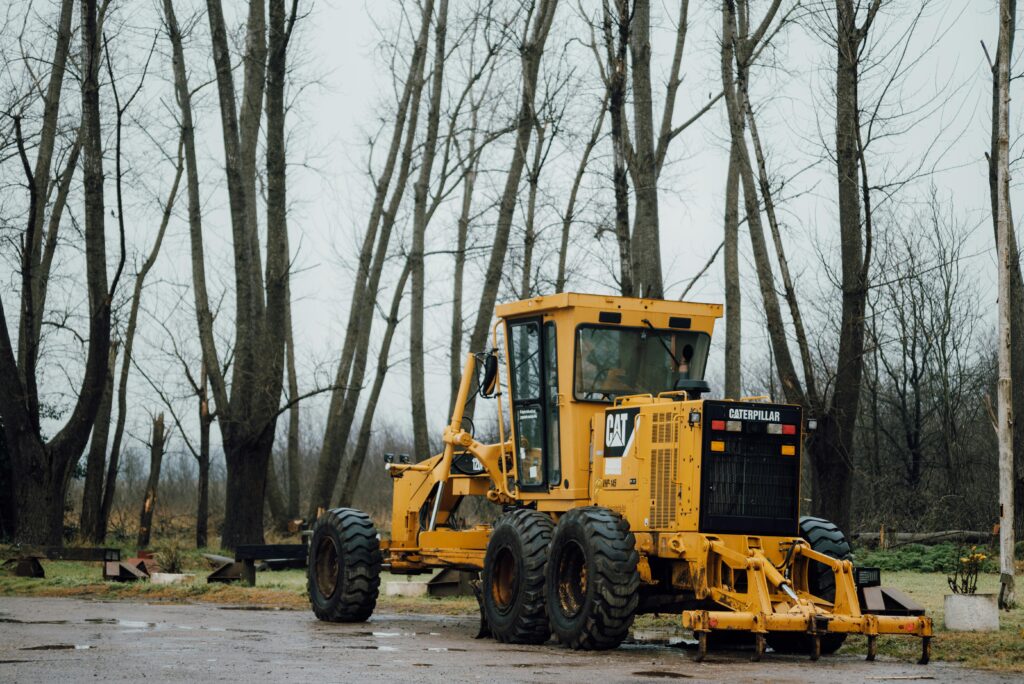
Look, if you’re running Caterpillar logger tyres on your forestry equipment anywhere in KwaZulu-Natal, you already know the frustration of a tyre going down when you’re three hours deep into the Midlands plantations. At ForkNTire, we’ve been dealing with this exact problem since 2008 – forestry operators calling us because they need tyres that actually hold up to what South African terrain throws at them.
We’re based in Pinetown, and over the years we’ve learned something important: Caterpillar logger tyres aren’t just about matching the numbers on the sidewall. It’s about understanding that your Cat 535D working the steep slopes near Umkomaas has completely different needs than the same model running relatively flat terrain up in Newcastle. That’s why we put this guide together.
What Makes Caterpillar Logger Tyres Different from Standard Forestry Tyres?
Right, so here’s the thing about tyres for Cat logging equipment.
Your standard industrial tyre – the kind you’d put on a forklift or even some construction equipment – it’s built for hard, prepared surfaces. Smooth concrete. Asphalt. Maybe some gravel if it’s feeling adventurous. Caterpillar logger tyres? They’re dealing with an entirely different world. We’re talking sharp rocks embedded in mud, branches that’ll punch through sidewalls, terrain that shifts between bone-dry and soup depending on whether it rained yesterday.
The construction is just different. Most quality Caterpillar logger tyres come with 26 to 32 ply ratings. That’s not marketing speak – it’s actual reinforcement layers that stop punctures. The sidewalls are beefed up because when you’re dragging timber through the Southern Drakensberg, your tyres are constantly scraping against stumps and debris. Standard tyres would be shredded within weeks.
Then there’s the rubber compound itself. Forestry tyres use formulations that stay flexible across temperature ranges whilst resisting cuts and tears. You know how some tyres get brittle in cold weather or go soft when it’s hot? Logger tyres can’t do that. They need to perform whether you’re working a frosty morning in the Midlands or dealing with scorching summer heat on the coast.
The tread pattern tells you a lot too. Look at Caterpillar logger tyres and you’ll see these massive, aggressive lugs angled for traction. They’re not there to look tough – though they do. They’re engineered for pulling heavy loads uphill through soft ground. The spacing between lugs matters because it lets mud clear out rather than packing in. Ever seen a tyre completely caked with mud spinning uselessly? That’s what happens when the tread pattern doesn’t self-clean properly.
How Do I Know Which Tyre Size My Caterpillar Logger Needs?
This is where things get specific to your operation.
Most Cat 525D and 535D models run 30.5L-32 tyres as standard. The bigger machines – your 545D and similar – typically need 35.5L-32. But here’s what we’ve learned from years of supplying logger tyres in Durban: what came off your machine originally might not be what’s actually best for how you’re using it now.
We had an operator last year – running a Cat 535D in the coastal plantations – who’d been replacing the same 30.5L-32 tyres every 18 months like clockwork. Kept complaining about tyre life. Turns out he was consistently overloading the machine for his contract requirements. Moving up to a higher load rating in the same size completely changed his experience. Tyres are still going strong two years later.
The ply rating matters more than most people think. We generally won’t recommend anything under 26-ply for serious forestry work in South African conditions. Yes, you can find cheaper tyres with lower ratings. You can also find yourself stuck in the middle of nowhere waiting for a replacement when that cheaper tyre fails. Your choice, but we know which one costs less in the long run.
When you call us about tyres for your Cat equipment, we’re going to ask questions. What model exactly? What terrain? How are you using it? These aren’t just conversation – they help us recommend tyres that’ll actually work for you. A Cat skidder running established forestry roads has different requirements than one that’s constantly breaking new trails through rough bush.
Are There Specific Brands That Work Best for Caterpillar Logging Equipment?
We work with several manufacturers, and honestly, the “best” brand depends on your specific situation and what you’re willing to spend.
BKT’s FS 216 series performs well here. We’ve supplied these Caterpillar logger tyres to operators across KZN and the feedback’s been solid. The LS-2 tread pattern handles our terrain, the rubber compound holds up, and the pricing makes sense for most operations. Not the cheapest, not the most expensive, just reliable middle ground.
Firestone’s Forestry Special range has history behind it. They’ve been making forestry tyres for decades, and that experience shows in the construction. The CRC LS-2 design resists the kind of damage that takes tyres out early. We’ve seen these perform well on Cat equipment working some pretty challenging terrain.
Primex LogMonster tyres offer good value. If you’re trying to balance performance against budget constraints – and who isn’t – these are worth considering. They don’t have the premium pricing of some brands, but they hold up to forestry work better than you might expect at that price point.
MAXAM’s MS931 LogXtra series works well for heavier Cat models. Deeper tread depth, robust construction, designed for equipment that’s moving serious timber through difficult conditions.
Here’s what we don’t do: we don’t push a single brand because we get better margins on it or because some rep took us for lunch. We match tyres to your actual needs. Tell us about your operation and we’ll recommend what makes sense.
What Should I Expect to Pay for Caterpillar Logger Tyres in Durban?
Pricing varies enough that giving you a number here would be misleading.
A 30.5L-32 forestry tyre with proper ply rating? You’re looking somewhere between R15,000 and R28,000 depending on brand and current exchange rates. The 35.5L-32 tyres for bigger Cat equipment run R22,000 to R38,000. But those are ballpark figures that might not reflect what you’d actually pay when you call us next week.
The rand’s been all over the place. Exchange rates shift. Manufacturer pricing changes. We give you a firm quote when you contact us because that’s the only number that matters.
But here’s something worth thinking about beyond just the sticker price. We’ve watched operators save R5,000 per tyre buying cheaper options, then spend double that in additional downtime and more frequent replacements. A tyre that costs R18,000 but lasts 2,000 hours costs you R9 per hour. A tyre that costs R25,000 but delivers 3,500 hours? That’s R7.14 per hour. The more expensive tyre is actually cheaper to run.
Not saying you should always buy the most expensive option. Sometimes budget constraints are real and immediate. Just saying that the cheapest purchase price doesn’t always mean the lowest cost over time. Something to consider.
If you’re running multiple Cat machines, talk to us about fleet pricing. Volume orders get better rates – that’s just how it works.
Contact us with your specifications and we’ll give you an accurate quote. Usually within a few hours if we’re not swamped. No hidden fees, no surprise charges when you go to collect or arrange delivery.
How Can I Extend the Life of My Caterpillar Logger Tyres?
This comes up constantly. Operators want better tyre life, which makes sense given what Caterpillar logger tyres cost.
Inflation pressure is the big one. Seriously. We see tyres that look fine visually but they’re running 10, 15 psi under specification. That under-inflation makes the tyre flex more, generates heat, breaks down the internal structure. You might not see the damage immediately, but you’re cutting the tyre’s life significantly.
Over-inflation causes different problems. The tyre’s footprint shrinks, concentrating all that weight and stress on a smaller area. Makes punctures more likely. Gives you a harsher ride. Wears the centre of the tread faster than the edges.
Check pressures weekly. Not when the equipment’s been working – check them cold. Keep a decent pressure gauge on site. The specifications come with the tyres when we supply them, but actually maintaining those pressures requires discipline that a lot of operations struggle with.
Daily walk-arounds catch problems early. Small cut that you repair now? Might extend the tyre’s life hundreds of hours. Same cut left alone develops into a sidewall failure that takes the tyre out completely. Ten minutes a day looking at your tyres can save you thousands in premature replacements.
How you operate the equipment matters too. Excessive speed over rough terrain generates unnecessary stress and heat. Sharp turns under load strain the internal structure. We’re not saying baby your Cat equipment – it’s built to work hard. But there’s working hard and there’s being unnecessarily rough on it. Operators who treat their machines well generally get better tyre life. That’s just reality.
Storage makes a difference if you’re keeping equipment idle for any length of time. Direct sunlight degrades rubber. If you’re between contracts or it’s a slow period, cover the tyres or move the machines under shelter. Small thing, but it adds up over time.
What’s the Difference Between LS-2 and Other Forestry Tyre Patterns?
LS-2 is the standard pattern for serious forestry work.
When you see Caterpillar logger tyres listed as LS-2, you’re looking at a specific tread design that’s been proven over decades of forestry use. Deep lugs, wide spacing, angled for traction when pulling loads. The spacing between those lugs lets mud and debris clear rather than packing in – which matters tremendously in KZN forestry areas where conditions can go from dry to muddy overnight after heavy rains.
The rubber compounds in LS-2 tyres typically include higher percentages of natural rubber. That gives better cut resistance when you’re rolling over sharp branches and rocks all day. The tread depth exceeds standard industrial tyres, giving you more wearing surface before the tyre’s done.
Other patterns exist. R-4 industrial tread works fine on prepared surfaces but doesn’t have the aggression needed for off-road forestry work. Some manufacturers offer proprietary designs with specific claimed advantages. Some perform well. But LS-2 has the track record. It’s been used on forestry equipment worldwide for years because it works.
For Cat equipment operating in South African conditions, we typically recommend sticking with proven LS-2 patterns unless you’ve got very specific requirements that justify exploring alternatives. Why experiment when you know LS-2 performs?
Should I Consider Chains for My Caterpillar Logger Tyres?
Chains make a huge difference in certain conditions.
If you’re working relatively flat terrain with established tracks, your Cat equipment probably performs adequately on tyres alone. But steep slopes? Extremely muddy conditions? The mountainous forestry areas of the interior? Chains often mean the difference between productive work and equipment that struggles to maintain traction.
Diamond pattern chains offer good all-around performance. Ring chains provide maximum grip for extreme conditions but they’re harder on both the chains themselves and your tyres. Multi-diamond patterns try to split the difference.
Chains do add costs. The initial purchase, obviously. Slightly higher fuel consumption from additional rolling resistance. They require monitoring and adjustment as they bed in. And improperly fitted chains can damage your Caterpillar logger tyres, so installation and tension checks become important maintenance tasks you can’t ignore.
A lot of operators keep chains available for seasonal use. Fit them during wet periods when traction becomes critical, remove them when conditions improve. Makes sense from a cost perspective and you’re not running chains when you don’t actually need them.
We can source appropriate chains for your Cat equipment’s tyre size. If you’re unsure whether you need them, describe your operating conditions and we’ll give you an honest assessment.
What Happens If I Run the Wrong Tyre Size on My Caterpillar Logger?
Things go wrong in ways that aren’t immediately obvious.
Oversized tyres alter your equipment’s ground clearance and centre of gravity. Your Cat skidder becomes less stable, particularly on slopes where forestry equipment already operates at the limits of safe angles. The turning radius changes too, affecting manoeuvrability in tight plantation rows.
Undersized tyres reduce ground clearance. Higher rotational speeds for the same ground speed. More heat generation. Faster wear. Increased risk of the undercarriage contacting obstacles.
Mixing different sizes on the same axle? That’s asking for drivetrain problems. The differential works harder compensating for different rolling diameters. Premature wear on expensive components. In extreme cases you’re looking at differential or transmission failures that cost vastly more than fitting proper tyres to begin with.
Load capacity becomes a concern too. Your Cat 535D has specific weight distribution across its tyres. Change the tyre sizes and you alter that distribution, potentially overloading individual tyres beyond their rated capacity. Accelerates wear. Increases failure risk under heavy loads.
We verify fitment for your specific Cat model before recommending sizes. If you’re uncertain about your current setup or thinking about different tyres, contact us first. Getting it right from the start saves headaches.
How Quickly Can I Get Caterpillar Logger Tyres in the Durban Area?
Speed depends on what you need and whether we’ve got it.
Common sizes – your 30.5L-32 and 35.5L-32 in popular brands – we typically maintain stock for. That means 24 to 48 hours for delivery in the greater Durban area or you can collect from our Pinetown location. This covers most Cat 525D, 535D, and similar models that represent the bulk of forestry equipment in KZN.
Less common sizes or specific brand requirements might need ordering. Could be a few days, could be two weeks depending on supplier stock and shipping. We’ll tell you the actual timeframe when you enquire. We don’t make promises we can’t keep because that doesn’t help anyone.
For urgent situations – your Cat’s down and you need tyres now – contact us immediately on 031 702 6335. We’ll check what’s available and explore options to expedite supply. Sometimes we can source through alternative suppliers. Sometimes we can suggest suitable alternatives that are immediately available. The goal is getting your equipment back to work.
Better approach though? Track your tyre condition and plan replacements before failures occur. Order when you notice they’re getting worn rather than waiting for actual failure. Gives you flexibility on timing and eliminates the stress of emergency situations.
Can ForkNTire Fit Caterpillar Logger Tyres On-Site?
We arrange fitting and can do on-site service for larger equipment.
Your Cat 545D isn’t something you casually drive to a tyre shop. Especially if you’re operating in remote forestry areas of the Midlands or up towards the Drakensberg. On-site service makes sense. We coordinate with technicians to come to your location, handle the tyre change where your machine sits. Minimises disruption, eliminates the complexity of arranging transport for heavy forestry equipment.
For smaller Cat equipment that you can reasonably transport, bring it to our Pinetown facility. Works well for Cat 525D models or machines you’re already moving between sites anyway. We can handle fitting while you wait or arrange convenient collection.
Proper fitting matters more than people realise. Incorrectly mounted tyres lead to premature failure, safety issues, damage to rims. Our technicians understand the specific requirements for forestry equipment tyres. Appropriate torque specifications for wheel nuts. Proper mounting techniques that ensure the tyre beads seat correctly.
We also provide guidance on initial break-in and maintenance after installation. New forestry tyres perform best when you follow manufacturer recommendations for the first hours of use.
Contact us about your specific situation. Whether you need tyres fitted on-site or you can bring your Cat equipment to us, we’ll figure out what works.
What Should I Know About Buying Used Caterpillar Logger Tyres?
The used market exists and we understand the appeal of lower prices. But used Caterpillar logger tyres present risks that often outweigh potential savings.
Forestry tyres endure extreme conditions. That compromises internal structure even when external tread looks reasonable. Cuts that have been repaired might hold initially but fail under load later. Impact damage from rocks creates internal separation that isn’t visible from outside. Heat damage from under-inflation or overloading weakens construction in ways you can’t easily detect.
New tyres through us? You know their complete history. Proper storage, never overloaded, no undisclosed damage. Used tyres come with unknown histories. That Cat 535D tyre with 60% tread remaining might have been removed because of internal damage. Might have been stored improperly for years. Might have operated chronically under-inflated.
The cost savings diminish when you consider service life. Used tyre at 40% of new price seems appealing until it only delivers 30% of the service life due to existing damage or reduced tread depth. You’re not actually saving money. You’re accepting higher risk of failures that cause downtime.
For operations where your Cat equipment’s uptime directly impacts revenue, new tyres from known manufacturers make more sense. Predictable performance. Known service life. Confidence in properly specified equipment.
If budget constraints are pushing you toward used tyres, talk to us. We might suggest different new tyre options that fit your budget better whilst providing the reliability you need.
Ready to Get the Right Tyres for Your Caterpillar Logger?
Your Cat forestry equipment represents serious investment in your operation. Fitting it with the right tyres ensures you get maximum productivity and reliability from that investment.
At ForkNTire, we’ve built our reputation on understanding what forestry operators actually need. We’re not here to sell you tyres – we’re here to help you find Caterpillar logger tyres that work in South African conditions. We take time to discuss your specific equipment, terrain, and operating conditions before recommending anything.
You’ll get honest advice about what works for your situation. Competitive pricing without hidden costs. Responsive service that keeps your operation moving.
We’re at 6 Schenk Rd in Pinetown, well-positioned to serve forestry operations throughout Durban, the Midlands, and broader KwaZulu-Natal. We maintain relationships with trusted manufacturers and suppliers that let us source a wide range of tyres and deliver them promptly.
Contact us on 031 702 6335 or check our industrial tyres page to discuss your requirements. Whether you need replacement tyres urgently or you’re planning ahead, we’ll provide the expertise and service to keep your forestry equipment productive.