
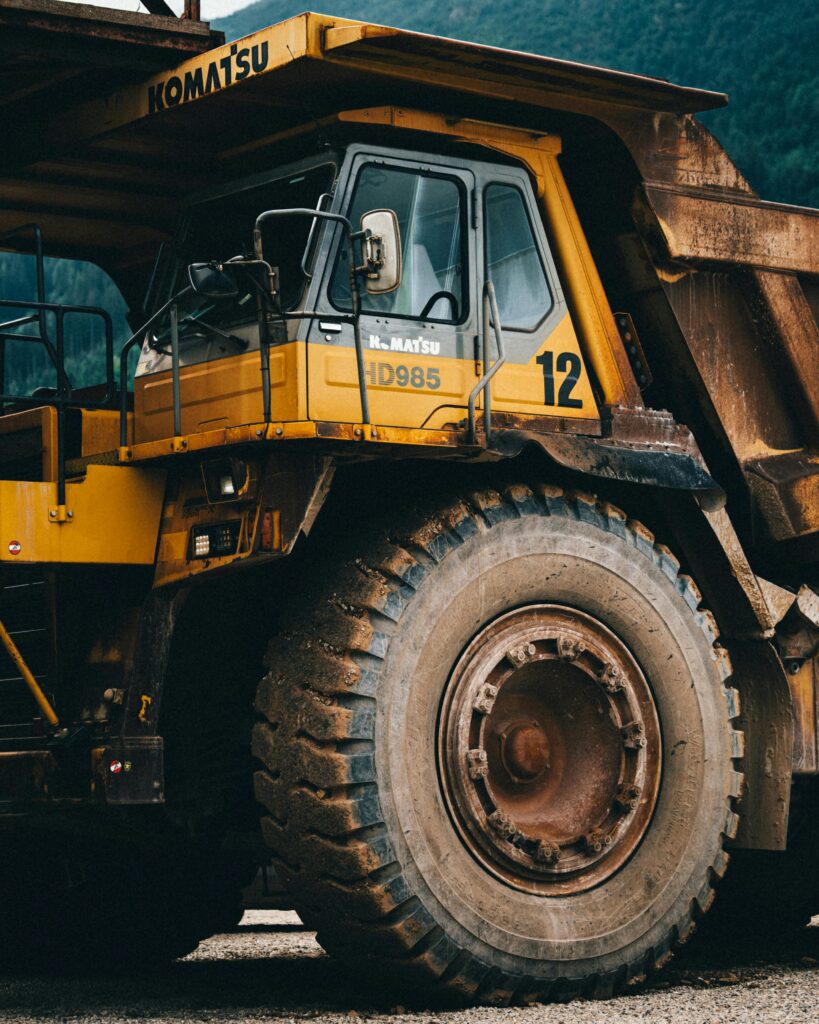
If you’re running Komatsu logging equipment in South Africa’s demanding forestry conditions, the tyres you choose can make or break your operation’s efficiency. We’ve spent over 16 years at ForkNTire helping forestry operators throughout KwaZulu-Natal and beyond select the right Komatsu logger tyres for their specific machines and terrain. This isn’t just about matching numbers on a sidewall – it’s about understanding how your Komatsu equipment works, where it operates, and what performance you actually need from your tyres.
Let’s talk about what really matters when it comes to keeping your Komatsu forestry machines moving productively.
What Makes Komatsu Logger Tyres Different from Standard Forestry Tyres?
Komatsu logger tyres aren’t simply generic forestry tyres slapped onto Komatsu machinery. Your Komatsu equipment comes with specific engineering requirements that demand properly matched tyres.
Komatsu designs their forestry machines with particular weight distributions, power delivery characteristics, and operational parameters. A Komatsu XT445L-3 forwarder, for example, has different suspension geometry and load dynamics compared to other manufacturers’ machines of similar capacity. The tyres need to complement these engineering decisions, not fight against them.
We’ve seen operations struggle because they fitted cheaper “equivalent” tyres that technically matched the size specifications but didn’t account for how Komatsu machines actually transfer loads through their suspension systems. The result? Premature wear, reduced traction, and sometimes dangerous instability on slopes.
Komatsu logger tyres typically feature reinforced bead areas to handle the torque characteristics of Komatsu’s powertrains. The sidewall construction needs to flex appropriately for Komatsu’s suspension travel whilst maintaining stability under the lateral forces these machines generate on hillsides. It’s engineering, not guesswork.
When we source logger tyres for Durban operations, we specifically ask about your Komatsu model because we know that what works perfectly on a competitor’s machine might perform poorly on yours. Your tyre choice should respect the engineering that Komatsu put into designing your equipment.
Which Komatsu Forestry Machines Need Specialised Logger Tyres?
Nearly every piece of Komatsu forestry equipment benefits from properly specified tyres, but some machines are more demanding than others.
Komatsu forwarders like the XT430, XT445, and XT460 series carry heavy timber loads over rough terrain. These machines need tyres that balance flotation with load capacity. We’ve worked with operators running XT445L-3 forwarders in the KZN Midlands who were experiencing soil compaction issues. Switching to properly specified Komatsu logger tyres with wider footprints reduced ground pressure whilst actually improving stability on slopes.
The Komatsu 855 and 875 series harvesters operate differently. They’re constantly repositioning on varied terrain whilst handling heavy timber. Their tyres need excellent traction for movement combined with stability for processing operations. Many harvesters spend time on steep ground where sidewall strength becomes critical – we’ve seen sidewall failures on underspecified tyres cause dangerous situations on hillsides.
Komatsu’s wheel loaders in forestry applications – machines like the WA200 and WA320 when configured for timber handling – face different challenges again. They’re often operating in yards on prepared surfaces but still exposed to sharp debris. The tyres need puncture resistance without sacrificing the manoeuvrability these machines require in confined spaces.
Even Komatsu’s smaller machines benefit from proper tyre selection. A PC130F forestry excavator fitted with incorrect tyres will struggle with stability during reach operations, particularly on uneven ground.
How Do You Choose the Right Tyre Size for Your Komatsu Logger?
Choosing Komatsu logger tyres starts with understanding your machine’s specifications, but it shouldn’t end there.
Your Komatsu’s manual specifies recommended tyre sizes, and that’s your starting point. However, we’ve found that actual working conditions often justify considering alternative sizes within acceptable parameters. A Komatsu forwarder operating primarily on established tracks in relatively flat terrain can sometimes benefit from slightly narrower tyres that reduce rolling resistance. The same machine working steep hillsides in soft ground might perform better with wider tyres that improve flotation and reduce ground pressure.
Check your machine’s load rating requirements. Komatsu publishes axle load data for their forestry equipment, and your tyres must safely handle these loads with appropriate safety margins. We typically recommend tyres rated at least 20% above your maximum anticipated axle loads. South African forestry operations often push equipment hard, and that margin provides real-world safety and longevity.
Consider rim compatibility carefully. Komatsu uses specific rim designs, and your chosen tyres must match not just the diameter but also the bead seat configuration. We’ve encountered situations where operators purchased tyres that were technically the correct size but wouldn’t seat properly on Komatsu rims, creating dangerous situations.
Ground clearance matters more than many operators realise. Increasing tyre diameter might seem beneficial for rough terrain, but it can reduce clearance between your machine’s components and obstacles. Komatsu engineers their forestry machines with specific ground clearances in mind – changing tyre sizes significantly can compromise this.
What Tread Patterns Work Best for Komatsu Logging Equipment in South Africa?
Tread pattern selection for Komatsu logger tyres depends heavily on where in South Africa you’re operating and what terrain you’re covering.
Aggressive directional tread patterns with deep, widely spaced lugs work best for Komatsu machines operating in muddy conditions or on steep slopes. We recommend these patterns for operations in the Southern Drakensberg forestry areas and the wetter parts of the Midlands. The deep lugs bite into soft ground, providing traction that keeps your Komatsu moving when conditions deteriorate. Self-cleaning characteristics matter here – mud needs to shed from the tread quickly or you lose traction rapidly.
More moderate tread patterns with closer lug spacing suit Komatsu equipment working primarily on established forestry roads and firmer ground. These tyres typically offer longer life because they wear more evenly, and they’re often quieter when your machines need to travel on public roads. Several forestry operations between Pietermaritzburg and Durban run Komatsu forwarders that split their time between plantation roads and highway transport – moderate tread patterns balance these demands better than aggressive off-road designs.
Flotation tread patterns with wide, shallow lugs work well for Komatsu machines operating in environmentally sensitive areas where ground damage must be minimised. These tyres distribute weight broadly, reducing soil compaction. We’ve supplied flotation-style tyres to operations along the North Coast working in areas with high water tables where ground pressure concerns override pure traction considerations.
Your tread pattern choice should also account for Komatsu’s particular power delivery. Komatsu forestry machines generally have excellent torque characteristics, which means they can overcome some traction limitations through power. However, this also means they can spin aggressive treads destructively if you’re not careful about throttle application in soft conditions.
Should You Use Bias or Radial Tyres on Komatsu Forestry Machines?
The bias versus radial question for Komatsu logger tyres isn’t as simple as one being universally better than the other.
Radial tyres generally offer longer tread life and better fuel economy on Komatsu forestry equipment. The radial construction allows the tread to maintain better contact with the ground surface, which improves traction and reduces slippage. We’ve seen operators report 20-30% longer tyre life when switching from bias to radial tyres on Komatsu forwarders operating in moderate conditions. Radials also run cooler, which matters when your Komatsu machine is working hard in summer conditions.
However, radials cost more initially, and that investment only pays off if your operation suits their characteristics. Radial sidewalls are more flexible, which improves ride quality but can be a disadvantage in some forestry applications. Sharp rocks and stumps can damage radial sidewalls more easily than the tougher construction of bias tyres.
Bias tyres excel in puncture resistance and sidewall durability. Their stiffer construction handles impacts better, making them preferred for Komatsu equipment working in particularly harsh terrain with abundant sharp debris. We recommend bias tyres for operations in rocky areas or where stumps and sharp branches are constant hazards. The initial cost savings of bias tyres can also matter for smaller operations managing tight budgets.
Some Komatsu forestry machines perform better with mixed configurations. We’ve worked with operators running radials on the front axle for steering response and bias tyres on the rear for durability. This approach works particularly well on Komatsu harvesters where the front tyres face more frequent repositioning whilst rear tyres handle heavy loads in one position during processing.
For our agricultural and forestry tyre applications throughout South Africa, we discuss your specific conditions before recommending bias or radial construction. Your terrain, budget, and operational priorities should drive this decision.
How Long Do Komatsu Logger Tyres Typically Last in KZN Conditions?
Tyre life on Komatsu forestry equipment varies dramatically based on how and where you operate, but understanding realistic expectations helps you budget and plan maintenance properly.
In typical KwaZulu-Natal forestry conditions with moderate terrain and good maintenance practices, quality Komatsu logger tyres generally deliver 2,500 to 4,000 operating hours. We’ve tracked this with several clients operating Komatsu forwarders between Durban and the Midlands. Machines working primarily on established tracks in plantations tend towards the higher end of this range. Equipment regularly operating on steep, rocky hillsides or in areas with abundant sharp debris typically falls into the lower half.
Several factors dramatically impact tyre life on Komatsu machines. Inflation pressure might be the most critical and most frequently neglected. Operating Komatsu logger tyres even 10% below recommended pressure accelerates sidewall flexing, generating excessive heat and causing premature failure. We’ve examined failed tyres from Komatsu machines where underinflation clearly caused the damage – the operators lost thousands of hours of potential tyre life through simple neglect.
Operator technique matters enormously. Aggressive throttle application that spins tyres on Komatsu equipment with powerful engines destroys tread rapidly. Operators who feather the throttle and allow tyres to grip properly can double tyre life compared to aggressive operators on the same machine in identical conditions. We’ve seen this variation within the same forestry operations.
Load management affects longevity significantly. Komatsu forwarders and loaders that consistently operate at or above their rated capacity wear tyres faster. Even quality tyres have limits, and regularly exceeding those limits shortens life predictably. Track your actual loads and compare them to your Komatsu machine’s ratings – the data often reveals opportunities for better load management that extends tyre life.
Seasonal factors in South Africa impact tyre wear patterns. Summer heat increases tyre temperatures on hardworking Komatsu machines, accelerating rubber degradation. Winter in the higher elevation forestry areas of KZN brings different challenges – cold temperatures can make rubber compounds temporarily less flexible, increasing cut and chip damage risk.
What Are the Common Tyre Problems with Komatsu Logging Equipment?
Understanding typical tyre problems helps you prevent expensive failures and extend the life of your Komatsu logger tyres.
Sidewall cuts and punctures rank as the most common issue we see on Komatsu forestry machines. Sharp branches, rocks, and stumps are everywhere in logging operations, and sidewalls are vulnerable. Komatsu’s suspension geometry on many of their forestry machines positions tyres where debris contact is frequent. Regular visual inspections catch developing problems before they become failures. We recommend daily visual checks and weekly detailed inspections where you actually feel along sidewalls for embedded objects or developing damage.
Uneven wear patterns often indicate alignment or inflation problems. Komatsu forestry equipment can develop alignment issues from impacts or component wear. One side of the tyre wearing faster than the other suggests alignment checking is overdue. Centre wear indicates overinflation, whilst excessive shoulder wear points to underinflation. Monitoring wear patterns tells you what’s actually happening with your machine.
Bead area damage occurs when Komatsu logger tyres aren’t properly seated or when rim issues exist. We’ve found that this problem often traces back to poor fitting practices or damaged rims that weren’t properly addressed before new tyres were mounted. The bead area must seal perfectly for safe operation, and damage here can cause sudden air loss with dangerous consequences on slopes.
Tread chunking happens when tyre rubber compounds can’t handle the forces your Komatsu machine generates. This often occurs when tyres designed for lighter applications are fitted to heavier Komatsu equipment, or when operators are particularly aggressive with throttle application. Quality Komatsu logger tyres use rubber compounds formulated to resist chunking under the torque these machines produce.
Valve stem failures cause more downtime than their simple construction would suggest. Impact damage to valve stems from branches or rocks creates slow leaks that are frustrating to diagnose. We recommend protective valve stem caps and positioning valve stems away from the most exposed areas when mounting tyres.
How Much Should You Budget for Komatsu Logger Tyre Replacement?
Budgeting properly for Komatsu logger tyres helps you avoid unwelcome surprises and maintain operational efficiency.
Individual tyre costs vary considerably based on size, construction type, and manufacturer. Smaller tyres for compact Komatsu forestry machines might run R3,500 to R6,000 each, whilst large tyres for heavy Komatsu forwarders can easily reach R15,000 to R25,000 per tyre. Radial construction typically costs 30-50% more than comparable bias tyres, though longer life often justifies the investment.
Full machine fitments represent more realistic budgeting figures since you rarely replace just one tyre. A complete set for a mid-sized Komatsu forwarder runs roughly R60,000 to R120,000 depending on tyre specifications and whether you’re choosing radials or bias construction. Larger Komatsu machines require bigger investments – a full fitment of premium radials for a heavy forwarder can exceed R180,000.
Plan for staggered replacement rather than waiting for complete failures. Replacing tyres when they reach 30-40% remaining tread prevents the operational disruptions of unexpected failures and allows you to time purchases when cash flow permits. Many successful forestry operations we work with maintain a rolling replacement schedule based on inspection data rather than crisis replacement when tyres fail.
Consider total cost of ownership, not just purchase price. Cheaper tyres that last half as long cost more over time once you factor in fitting labour, machine downtime, and the operational inefficiencies of worn tyres. We’ve worked with operators who switched to premium Komatsu logger tyres and actually reduced their annual tyre costs despite higher unit prices because the tyres lasted so much longer.
Volume purchasing provides better value if you’re running multiple Komatsu machines. When you contact us for fleet requirements, we can provide pricing that reflects the volume. Operators with three or more Komatsu forestry machines often benefit from ordering complete spare sets at better rates than individual tyre purchases.
Installation and service costs add to your total investment. Professional fitting with proper torque specifications and balancing matters for safe operation and tyre longevity. Cutting corners on installation to save a few hundred rand often costs thousands in premature tyre failure.
Can You Mix Different Tyre Brands on Komatsu Forestry Equipment?
Mixing tyre brands on your Komatsu logging equipment introduces complications that you should understand before making this decision.
Technically, you can fit different brands of Komatsu logger tyres to the same machine if they match all the critical specifications – size, load rating, construction type, and tread pattern category. We’ve seen operations successfully run mixed brands when budget constraints required replacing individual failed tyres rather than complete axle sets.
However, mixing brands creates performance inconsistencies. Different manufacturers formulate their rubber compounds differently, resulting in variations in grip characteristics, flexibility, and wear rates. Your Komatsu machine might exhibit slightly different handling depending on which tyres are gripping at any moment. This becomes most noticeable on slopes where traction differences between left and right sides can affect stability.
Tread pattern differences between brands create additional complications. Even if both tyres are classified as “aggressive forestry” patterns, the actual lug design, spacing, and depth vary between manufacturers. Your Komatsu’s traction can vary noticeably depending on which brand’s tread is engaging the ground. We’ve had operators report their machines pulling to one side when different tread patterns were fitted on opposite sides of an axle.
Wear rate variations mean mixed brands will need replacement at different times. You might replace one brand’s tyres at 2,500 hours whilst the other brand still has useful life remaining. This complicates maintenance planning and can force you into additional mixing situations as tyres need replacement at staggered intervals.
Best practice is matching tyres by brand, model, and age per axle as a minimum. If budget absolutely requires mixing brands, keep the same brand on both sides of an axle and preferably match front and rear if your Komatsu machine has similar-sized tyres front and rear. Never mix radial and bias construction on the same axle – the different deflection characteristics create handling and stability problems.
For our Durban-based operations, we generally recommend planning tyre purchases in axle sets at minimum. The modest additional cost of replacing both tyres simultaneously prevents the complications and potential safety issues of mixed fitments. We stock a range of quality brands, and we can work with your budget whilst keeping your Komatsu machine fitted with properly matched tyres.
Where Can You Get Quality Komatsu Logger Tyres in Durban?
Finding reliable suppliers for Komatsu logger tyres in Durban means looking beyond just price lists to consider knowledge, service, and support.
At ForkNTire, we’ve specialised in forestry and industrial tyres since 2008, working with Komatsu equipment operators throughout KwaZulu-Natal. Our location in Pinetown puts us well-positioned to serve forestry operations from the South Coast through the Midlands and up to Northern KZN. We maintain stock of common Komatsu logger tyre sizes and can source specialized sizes through our manufacturer relationships.
Quality suppliers should understand your specific Komatsu model and its operational requirements. When you contact us with a tyre enquiry, we ask about your machine, terrain, and current performance issues because these factors matter as much as the numbers on your existing tyres. Generic “one-size-fits-all” recommendations often lead to suboptimal performance and premature wear.
Response time matters when you’re running forestry operations on tight schedules. We typically provide quotes within hours of receiving detailed enquiries, and we can often supply stock items within 24-48 hours in the greater Durban area. For specialized Komatsu logger tyres that we need to order, we provide realistic timeframes rather than optimistic estimates that leave you waiting.
Professional fitting and installation services should be available through your tyre supplier. We arrange expert installation either at our Pinetown facility for smaller equipment or on-site for larger Komatsu machines that aren’t practical to transport. Proper installation with correct torque specifications and balancing extends tyre life and ensures safe operation.
Ongoing support makes the difference between a one-time supplier and a long-term partner. We provide maintenance guidance, inflation pressure recommendations for your specific conditions, and advice on extending tyre life. When problems develop, we help diagnose whether it’s actually a tyre issue or whether underlying machine problems need addressing.
Our professional tyre services extend beyond simple supply – we support your operation’s efficiency with responsive service and expertise developed over 16 years working with demanding forestry applications throughout South Africa.
Making Smart Decisions About Your Komatsu Logger Tyres
Your Komatsu forestry equipment represents a significant investment, and the tyres you choose directly impact your return on that investment. Cheap tyres that fail prematurely cost you far more than their purchase price when you factor in downtime, reduced productivity, and safety risks.
Quality Komatsu logger tyres properly matched to your equipment and conditions deliver reliable performance that keeps your operation moving. The right tyres improve traction, reduce operator fatigue through better ride quality, minimize soil compaction, and provide the durability needed for South African forestry work.
We work with forestry operators who understand that tyre selection isn’t where you cut corners. These successful operations view tyres as critical operating equipment deserving the same careful consideration as other major components. They track tyre performance, maintain proper inflation, replace tyres proactively before failures, and build relationships with suppliers who understand their business.
Whether you’re running a single Komatsu harvester or a fleet of forwarders and loaders, your tyre decisions matter. Take time to understand what your machines actually need, consider total cost of ownership rather than just purchase price, and work with suppliers who bring experience and knowledge to the relationship.
If you’re operating Komatsu logging equipment in KwaZulu-Natal or anywhere in South Africa, we’d welcome the opportunity to discuss your tyre requirements. Contact us at 031 702 6335 or reach out through our contact page to speak with our team. We’ll ask the right questions, provide honest recommendations based on your specific situation, and deliver the quality tyres and service your operation deserves.
Your Komatsu machines work hard in demanding conditions. They deserve tyres that match their engineering and your operational requirements. Let’s make sure you get exactly that.