
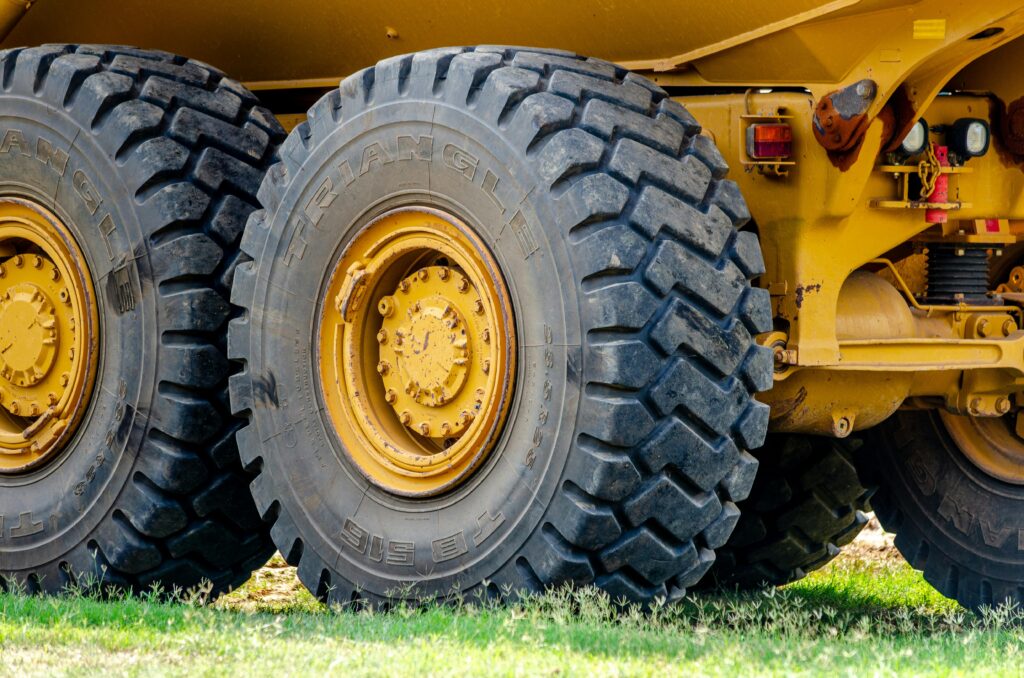
Look, we’re not going to pretend that Tigercat logger tires are cheap. They’re not. But after fitting tyres on forestry equipment across South Africa for years – from the pine plantations in the Southern Cape to the eucalyptus operations in Mpumalanga – we’ve learned that cheap tyres cost you a hell of a lot more in the long run.
At ForknTire, we’ve had the same conversation dozens of times. A contractor calls, wants to save money on tyres, fits the cheaper option, then phones us back six months later after they’ve been stuck three times, replaced two tyres already, and lost more in downtime than they “saved” on the purchase price. It’s predictable.
The thing about logging work in South Africa is that you can’t just slap any heavy-duty tyre on a Tigercat and call it sorted. Our terrain is brutal – steep slopes, rocky ground, mud that swallows equipment whole during the rainy season. You need specialist rubber that’s actually designed for this work, not generic industrial tyres with aggressive tread.
What Makes Tigercat Logger Tires Different from Standard Forestry Tyres?
Here’s where it gets interesting. Most people think a forestry tyre is a forestry tyre – just something big and knobbly that grips in mud. Wrong.
Tigercat logger tires start with sidewall construction that’s frankly over-engineered for normal use, which is exactly what you need. We’re talking multiple layers of reinforced fabric and steel, because these tyres spend their entire working life being dragged across tree stumps, bounced over rocks, and twisted sideways on slopes that would make most people nervous just walking on them.
The rubber compound is different too. Standard industrial tyres use compounds optimized for warehouses or construction sites – hard surfaces, relatively gentle use. Logger tyres need rubber that stays flexible in the freezing mornings we get in the Drakensberg foothills but doesn’t turn to mush in the heat of a Lowveld summer afternoon. And it needs to resist the kind of cuts and tears you get from working in forests where everything is either sharp or heavy or both.
But the real difference – the one that becomes obvious after your first wet season – is the tread design. Those deep lugs aren’t just for show. They’re spaced specifically so mud doesn’t pack in and turn your R150,000 tyres into expensive slicks. We’ve watched Tigercat machines working through conditions where other equipment was sitting idle because their tyres couldn’t grip anymore.
The self-cleaning aspect is critical in South African plantations. When you’re extracting timber in KwaZulu-Natal during winter, the mud is this sticky, clay-based nightmare that clings to everything. Tyres that don’t shed that mud lose traction fast. Tigercat’s tread patterns actually work.
And then there’s the bead construction, which nobody thinks about until it fails. The beads on logger tyres take an absolute hammering from the twisting forces when you’re turning on slopes or the impacts from loading timber. We see bead failures on cheaper tyres all the time. On proper Tigercat logger tyres? Rarely.
How Long Do Tigercat Logger Tires Last in South African Conditions?
This is the question everyone asks, and nobody wants to hear the answer: it depends.
We’ve seen Tigercat logger tire sets last anywhere from 2,000 hours to over 8,000 hours. That’s a massive range, and it’s not random – it comes down to where you’re working, how you’re working, and whether you’re actually maintaining the tyres properly.
Down in the Southern Cape, where the terrain is rolling pine plantations and the soil is sandy loam, we’ve got clients getting 6,000 to 8,000 hours from their tyres. These are operations that check pressures weekly, rotate tyres strategically, and have operators who know how to read terrain and avoid unnecessary wheelspin. They also call us when they spot a small cut instead of waiting until it’s a major problem.
Compare that to the steep eucalyptus plantations in parts of KwaZulu-Natal. Same tyres, different terrain. You’re looking at 3,000 to 5,000 hours there, and that’s not because the tyres are defective or the operators are careless. It’s because the ground is rocky, the slopes are steeper, and the constant turning and braking on grades just wears rubber faster. Physics doesn’t care about your budget.
The biggest variable – and this is something we see repeatedly – is operator skill. An experienced operator who understands their machine, reads the terrain ahead, and doesn’t rely on wheelspin to get out of trouble will add literally thousands of hours to tyre life. We always tell forestry companies that operator training is as important as the tyre purchase. Better operators = longer tyre life = lower operating costs. Simple.
Seasonal factors matter too. During the wet months, increased mud and slippery conditions accelerate wear if you’re not careful about wheelspin. And we’ve noticed that two-shift operations tend to wear tyres differently than single-shift work, partly because night operators can’t see terrain hazards as clearly and partly because tired operators make worse decisions.
One client in Mpumalanga tracks everything obsessively – tyre pressure, wear patterns, operating hours, terrain conditions. His tyres consistently outlast similar operations by 30-40% because he’s methodical about maintenance and operator training. It’s not complicated, just disciplined.
Which Tigercat Logger Tire Size Do You Need for Your Machine?
Getting this wrong costs you money, full stop. We’ve had contractors try to save a few rand by fitting undersized tyres or using “close enough” sizes from other brands, and it always – always – ends badly.
Tigercat publishes tyre size recommendations for every machine model, and these aren’t suggestions pulled from thin air. They’re based on actual field testing under real working conditions. For the 600 series skidders, you’re typically looking at 30.5L-32 or 35.5L-32 tyres depending on your specific model and what you’re doing with it. Feller bunchers often run 28L-26 or 30.5L-32. Forwarders can be anything from 600/55-26.5 to 710/45-26.5 depending on their capacity.
What confuses people is the difference between physical size and load capacity. A tyre might physically bolt onto your machine but lack the load rating to handle the weight safely when you’re hauling timber up steep extraction roads. At ForknTire, we check both the load index and ply rating because fitting inadequate tyres is dangerous, not just inefficient.
South African operations need to be realistic about their work. If you’re on relatively flat ground with good access roads, you might get away with the smaller size options. But if you’re working steep terrain or need maximum flotation in soft ground – and let’s be honest, most SA forestry operations deal with both – go with the larger sizes. Yes, they cost more upfront. But better traction, reduced ground pressure, and longer tyre life because the load is spread across more rubber? That’s worth it.
We keep detailed records of what different Tigercat models are running successfully in various South African conditions. This real-world data is often more useful than manufacturer specs alone because it accounts for our specific terrain and the way SA contractors actually work, not idealized conditions.
Should You Choose Radial or Bias-Ply Tigercat Logger Tires?
Right, so this debate has been going on for years and it’s not going away because both types have legitimate advantages depending on your situation.
Bias-ply tyres are the traditional choice. That crisscrossed ply construction creates sidewalls that are incredibly tough – they resist punctures and cuts from stumps and rocks better than radials. In the really rough, rocky terrain you get in parts of Mpumalanga and the Eastern Cape, bias-ply tyres can take punishment that would destroy radials. They’re also cheaper upfront, which matters when you’re fitting six or eight tyres on a machine and the invoice is going to make your accountant weep.
The downside? Harsher ride and faster wear on the centre tread if you’re doing road travel. The entire tyre flexes as one unit, which generates more heat and can lead to premature wear if you’re moving between cutting blocks regularly. We’ve seen bias-ply tyres with the centre lugs worn down while the shoulders still look new – that’s typically from too much roading.
Tigercat logger tires in radial construction have gained a lot of ground in South Africa over the past decade or so. The sidewalls flex independently, which gives you better traction and a smoother ride. Less operator fatigue on long shifts, which is a real consideration. They also run cooler, which often translates to longer life, especially in operations that do a fair bit of road travel or work in the hot Lowveld.
But – and this is important – radial sidewalls are more vulnerable to cuts and punctures in extremely rocky terrain. That flexibility that makes them comfortable also makes them more susceptible to damage. And they cost more upfront, though the total cost of ownership often favours radials when you factor in longer wear and better fuel efficiency.
In practice, we usually recommend bias-ply for steep, rocky terrain with minimal roading, and radials for gentler terrain or operations that move between blocks frequently. A lot of contractors run radials on forwarders for the better ride and traction, but stick with bias-ply on feller bunchers that stay in the cutting area. Mix and match based on the work each machine does.
How Do You Know When to Replace Your Tigercat Logger Tires?
This is where experience matters, because waiting too long costs you in downtime and safety, but replacing too early wastes money.
Tread depth is the obvious starting point. Tigercat logger tires typically start with 50-60mm of tread. Once you’re down to 20mm, traction drops significantly and you’re much more vulnerable to damage reaching the casing. We recommend replacement at 25-30mm remaining tread – gives you a safety margin before performance really deteriorates.
But tread depth alone doesn’t tell the whole story. Uneven wear is a big red flag. If one side of the tyre is worn to 20mm while the other still has 40mm, that tyre’s past its useful life regardless of average tread depth. This usually indicates alignment issues or operator technique problems, but either way, the tyre needs replacing because it won’t grip reliably anymore.
Sidewall damage is where things get serious. Small cuts and scuffing are inevitable – you’re working in forests, everything wants to damage your equipment. But once you see cords showing or cuts that go more than halfway through the sidewall thickness, replacement isn’t optional. We’ve seen contractors nurse damaged tyres along to save money, then have catastrophic failures that cost them days of production and risk injuring operators. Not worth it.
Weather checking – those small cracks in the rubber – becomes a concern on older tyres, especially if machines sit idle for extended periods. South African sun is harsh, UV damage degrades rubber. If you’ve got significant weather checking plus moderate tread wear, replace the tyres even if tread depth measurements alone wouldn’t mandate it.
And always check the bead area. If you’re seeing rubber deterioration around the bead or the tyre’s lost chunks of rubber near the rim, that’s a replacement situation. Bead failures on heavy equipment are dangerous and always happen at the worst possible time.
What Terrain Challenges Do Tigercat Logger Tires Handle Best?
Tigercat logger tires are genuinely impressive in their capability range, but understanding their strengths helps you work more efficiently and avoid unnecessary damage.
Soft, muddy ground is where these tyres really excel. The deep, widely-spaced lugs bite through surface mud and find firmer ground beneath. The self-cleaning tread means mud doesn’t pack in and turn them into slicks. We’ve watched Tigercat machines working in KwaZulu-Natal plantations during rainy season in conditions where other equipment needed winching out every few metres. Proper logger tyres just kept going.
Rocky terrain tests the construction quality. The thick tread blocks and reinforced sidewalls resist punctures from sharp rocks that would shred lighter tyres. In the rocky eucalyptus plantations around Mpumalanga, proper logger tyres are the only economically viable option because the repair and replacement costs of anything less are ridiculous.
Steep slopes are daily reality for many SA forestry operations. Tigercat tyres provide directional grip for climbing and braking control for descending, while the reinforced casing resists twisting forces from turning on side slopes. But – and this is critical – tyre capability doesn’t replace good operating practices. No tyre can overcome poor slope management or inappropriate machine positioning.
There’s one terrain combination where even the best Tigercat logger tyres struggle: sharp, angular rock combined with steep grades. Some Eastern Cape plantation terrain is just exceptionally demanding. You’re going to take tyre damage that’s unavoidable given the operating environment. Doesn’t mean the tyres are inadequate – means the terrain is extreme and you need to budget accordingly.
Are Tigercat Logger Tires Worth the Investment for South African Forestry Operations?
The upfront cost makes people hesitate, we get it. Genuine Tigercat logger tires cost 30-40% more than generic forestry tyres or off-brand alternatives. That’s a real difference when you’re looking at the invoice.
But here’s what we’ve seen tracking total cost of ownership across dozens of operations: the premium tyres typically cost 20-30% less per operating hour. Longer service life, fewer punctures and repairs, better fuel efficiency, reduced downtime – it adds up month after month. We’ve got spreadsheets full of this data and the pattern is consistent.
The productivity gains are actually bigger than the direct cost savings. When your machines stay running instead of sitting idle waiting for tyre repairs, when you can work through wet conditions instead of shutting down, when you can access steeper terrain safely – all of this translates to tonnes moved and revenue generated. One KZN contractor calculated that switching to proper Tigercat logger tyres increased monthly tonnage by 15% just from fewer unplanned maintenance stops.
Safety’s harder to quantify but it matters. Quality tyres reduce blowout risk, improve stability on slopes, provide better traction in emergencies. We’ve never had a customer regret investing in proper tyres after experiencing a close call that quality rubber helped them avoid.
For smaller operations or contractors starting out, the upfront investment is genuinely challenging. We usually recommend starting with quality tyres on primary production machines and upgrading secondary equipment as cash flow allows. The machines doing the most work in the most demanding conditions absolutely need genuine Tigercat logger tires. This isn’t where you save money.
How Can Proper Maintenance Extend Your Tigercat Logger Tire Life?
Proper maintenance can easily double tyre life. Not exaggerating – we’ve seen it repeatedly. And it doesn’t require sophisticated equipment or extensive downtime.
Inflation pressure is the big one. Operating tyres underinflated by even 10% dramatically increases wear and heat buildup. Overinflation reduces traction and makes tyres more vulnerable to impact damage. Check pressures weekly when machines are cold, before the day’s work starts. Different Tigercat models and tyre sizes have different pressure specs – don’t assume all logger tyres run at the same pressure.
Visual inspections should be part of every operator’s daily routine. Walk around the machine, look for cuts, embedded objects, unusual wear, sidewall damage. Takes five minutes, prevents major failures. We train operators on what to look for and when to flag a tyre for our attention. Catching small cuts before they become major splits saves thousands of rand and prevents dangerous blowouts.
Remove embedded rocks, metal debris, branches from the tread regularly. These work deeper into the rubber over time and eventually penetrate the casing. Operations where operators clear debris daily at lunch get consistently better tyre life than operations where debris is left until it causes problems.
Rotation strategies matter, particularly on machines where certain positions wear faster. Forwarders often wear front tyres faster (steering, weight transfer during loading). Skidders might see faster rear wear from power delivery. Rotating at appropriate intervals evens out wear, extends overall life. We work with operations to develop rotation schedules based on their specific machines and usage.
Proper tyre repair and maintenance makes a real difference. Not every cut means replacement – many can be professionally repaired if caught early. But field repairs with plugs and patches are temporary at best on heavy equipment. Proper vulcanized repairs done by specialists with correct equipment and materials can restore damaged tyres to near-new strength.
What’s the Best Way to Source Genuine Tigercat Logger Tires in South Africa?
Getting genuine Tigercat logger tires requires working with suppliers who have proper relationships with authorized distributors and can guarantee authenticity. The forestry tyre market has grey imports and counterfeits, and fitting dodgy tyres to expensive Tigercat equipment is asking for trouble.
Genuine Tigercat tyres have specific markings and serial numbers. Check them. Be suspicious of deals that seem too good to be true. If someone’s offering “genuine” Tigercat logger tyres at 50% below market, they’re not genuine. Pricing on these specialized tyres is relatively consistent across authorized suppliers because the cost structure doesn’t allow massive discounting.
Lead times matter. Specialized sizes aren’t always in stock locally – you might wait several weeks if specific sizes need importing. Smart operations maintain at least one spare set for critical machines so a failure doesn’t mean weeks of downtime waiting for replacements from overseas.
Work with suppliers who understand forestry and can provide technical support. You want someone who can advise on tyre choice for your specific application, arrange mobile fitting to minimize downtime, and has expertise to diagnose performance issues. Generic tyre dealers who mainly work with cars and trucks often lack the specialized knowledge needed.
We maintain relationships with the authorized Tigercat parts network and can source tyres for any model. More importantly, we understand SA forestry and can advise on what’s actually working in conditions similar to yours. The right spec on paper doesn’t always prove best in real-world use – this practical knowledge comes from years working with local operators.
How Do Tigercat Logger Tires Perform in Wet South African Forestry Conditions?
Wet conditions are where Tigercat logger tires really prove their engineering quality. SA plantation forests get serious rainfall – KwaZulu-Natal, Eastern Cape, parts of Mpumalanga – and you need tyres that maintain traction when the ground turns to soup.
The deep lugs penetrate surface mud and grip firmer soil beneath. Lug spacing allows mud to escape rather than packing solid, which kills traction on poorly designed tyres. We’ve seen operations continue working through conditions that would stop equipment on standard tyres simply because proper logger tyres could still find grip.
The rubber compound stays flexible when wet, maintaining traction. Some harder compounds become slippery when wet – almost like plastic on mud – but quality logger tyres use formulations that grip even when saturated. Critical when working steep slopes where traction loss puts equipment and operators at serious risk.
Hydroplaning matters when moving between blocks on wet plantation roads. Tigercat tyre tread patterns channel water away from the contact patch, reducing risk of floating on water film and losing steering. You’re never doing highway speeds in a skidder, but even 20-30 km/h is dangerous if you lose directional control on wet roads.
The limitation: no tyre overcomes truly waterlogged ground where there’s no firm substrate. Some SA plantations during peak wet season reach a point where even the best tyres can’t prevent bogging. Smart operators recognize these conditions and adjust schedules rather than damaging equipment and plantation roads trying to push through impossible conditions.
At ForknTire, we’ve built our business understanding the real challenges South African forestry faces and providing solutions that actually work in our conditions. Whether you’re running one Tigercat machine or managing a fleet, the right tyres make the difference between profitable operations and constant frustration.
We stock logger tyres suited to SA forestry work, and our team has expertise matching tyres to specific machines and operating conditions. We provide ongoing support that keeps equipment running – pressure monitoring, maintenance advice, emergency mobile repairs that minimize downtime.
If you’re ready to upgrade your Tigercat equipment with tyres delivering the performance and durability your operation demands, or need expert advice managing current tyre challenges, get in touch. We understand SA forestry, we know Tigercat equipment, and we’re committed to keeping your operation moving regardless of terrain or conditions.