
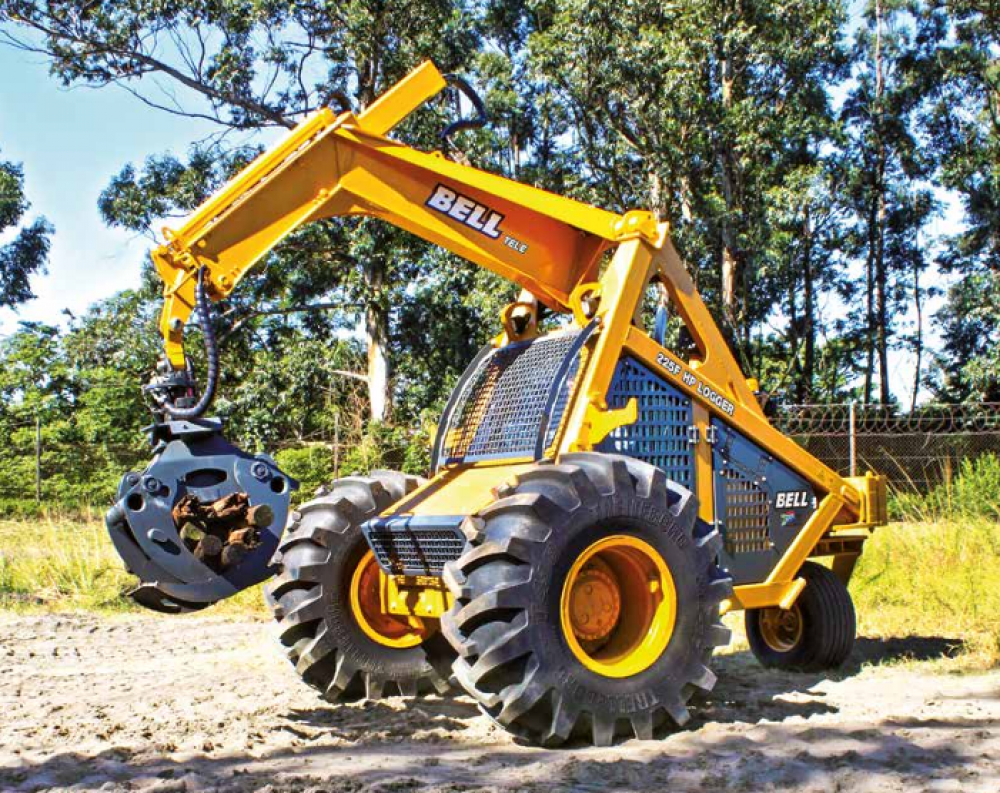
Look, we’re going to be straight with you about Bell Equipment logger tires. When they’re worn out or damaged, you’re not just looking at the cost of new rubber. That’s actually the smallest part of what it’s going to cost your operation.
We fit tyres on Bell loggers pretty much every week here in Pinetown. Forestry guys, mining operations, construction companies – they all come through. And honestly? The ones who leave it too long, who try to squeeze just another month out of tyres that are clearly done? They’re the ones who end up spending the most money. Not just on tyres either. We’re talking damaged rims, busted suspension components, lost production time. It adds up fast.
Here’s what we’ve picked up from years of working with these machines, specifically in the KwaZulu-Natal conditions. Because let’s be honest, what works in Gauteng might not cut it here in the coastal humidity and red clay. Our work with forestry and industrial equipment has taught us which tyres actually hold up around here and which ones are going to leave you stranded halfway through a wet season.
What’s Actually Different About Bell Logger Tyres?
Right, so Bell Equipment logger tires aren’t just big tyres. They’re not even just forestry tyres. They’re specifically engineered for the kind of punishment a logger takes.
The sidewalls are reinforced differently. The tread patterns are deeper. The rubber compound itself is formulated to resist all the cuts and punctures you get from dragging logs through the bush. We’ve had guys come in thinking they can save money with standard industrial tyres. Heavy-duty truck tyres, whatever. It doesn’t work. Not for long anyway.
The problem is the lateral stress. When you’re working on a slope – and there’s a lot of slope work in KZN forests – your tyres are taking forces they’re not designed for if they’re just regular industrial rubber. We’ve seen standard tyres literally torn apart under conditions that proper logger tyres handle without breaking a sweat.
Then there’s the tread design. Those aggressive patterns with the deep lugs? That’s not just for show. The spacing is critical. Mud clears out instead of packing in. Saves you time, keeps traction up. In our wet summers, that can mean the difference between a productive day and sitting stuck waiting for a recovery vehicle.
The bead construction is different too. A tyre coming off the rim on a logger isn’t like losing a tyre on a bakkie. It’s dangerous. Expensive. Usually both. Bell specifies particular bead designs for exactly this reason. The impacts and side loads these machines take would unseat a standard tyre in no time.
When Do You Actually Need New Tyres?
Your tyres are already telling you when they need replacing. Most operators just aren’t listening.
Tread depth is the obvious one. Once you’re down to 50% of what you started with, you need to be planning replacement. Not thinking about it. Planning it. Actually booking it in, budgeting for it. We see too many guys waiting until they’re running on threads.
Here’s what they don’t realise – and we try to explain this, but it doesn’t always sink in – once you’re past that 50% mark, the tyre’s ability to handle impacts drops off a cliff. Looks okay from ten metres away. Fails catastrophically when you hit the wrong rock or stump. We’ve pulled apart tyres that operators swore were fine just a week earlier.
Sidewall damage is worse than tread wear, actually. Small cut? Bulge? Anything where you can see cord? That’s a problem. That’s a problem now, not later. Water gets in, starts breaking down the internal structure. What looks like a minor cut can be hiding major damage underneath.
We had a guy bring in his logger last month. Sidewall cut he’d been “monitoring” for three weeks. Monitoring. Like it was going to heal itself or something. When we pulled the tyre off, the internal damage was catastrophic. Another week and it would’ve failed completely, probably taken the rim with it.
Uneven wear tells you something’s wrong with the machine, not just the tyres. One side wearing faster than the other? Cupping? Weird patterns you can’t explain? That’s alignment, suspension, pressure – something. Don’t just replace the tyres and call it done. You’ll just wear out the new ones the same way.
Which Bell Models Need Special Attention?
The 2726E series – we see a lot of these in coastal operations – those typically run 600/50-22.5 or 710/45-26.5 depending on setup. Tough machines. They need tyres that can keep up with them.
The bigger 3066D loggers are becoming more common in the commercial plantations. These things are beasts. They need 710/45-26.5 or 750/55-26.5, and quality really matters here. This isn’t a machine where you experiment with budget options. The loads they carry, the terrain they work – you need proper rubber.
Smaller 2046 models do lighter work usually, tighter spaces. The tyre sizes are different but they’re no less important. Good tyre selection still makes or breaks productivity.
What we’ve learned – and this only comes from being here in Pinetown, working with KZN operations – is that the red clay in some areas behaves completely differently to the coastal sand. The steep terrain in the midlands versus the flatter areas closer to Durban. All of this affects how tyres perform. We know which specs work where because we’ve seen what fails and what doesn’t.
We still see plenty of older Bell models too. AD series, early C-series machines. Finding the right tyres gets trickier as manufacturers move on, but we’ve got suppliers who can still source decent rubber for these. There’s life left in these older machines if you maintain them properly.
Why Don’t Tyres Last as Long Here?
KwaZulu-Natal is genuinely tough on Bell Equipment logger tires. We see the results every single day.
The climate alone is brutal. Summer heat and humidity, then cooler dry winters. The constant temperature cycling makes the rubber work harder, flex more, break down faster than it would in more stable conditions. This isn’t theory – we’ve compared notes with suppliers in other provinces and our tyres just don’t last as long. Same models, same machines, worse results here.
Then there’s the moisture. The rainfall we get, particularly coastal and midlands, means you’re often working in the wet. The tyres are designed for it, sure, but constant exposure to water combined with our abrasive mud and clay? It’s like running sandpaper over the tyres continuously. Wears them down faster than you’d see in drier areas.
The terrain doesn’t help. Most of our commercial plantations are on slopes. Working across a gradient puts extra stress on tyres – the downhill ones carry more load than the uphill ones. You’ll see asymmetric wear as a result. Add the rocky ground we have in a lot of forestry areas and you’ve got conditions that are genuinely hard on rubber.
Working practices play a role too. There’s pressure to keep machines moving. Loads per day, tonnes per month. Sometimes that means taking routes that are quicker but harder on tyres. Or working in conditions that really you should wait out. We get it – the commercial pressure is real. Just wish more operators understood the false economy in running worn tyres to save money.
Load shedding has created new headaches too. Trying to make up for lost time when the power’s back means running harder, longer. That intensity without increased maintenance? Shows up in the tyres first.
Should You Repair or Just Replace?
We get asked this constantly. The answer depends entirely on what’s damaged and where.
Punctures in the tread area – we can often repair those if they’re caught early and not too big. We do good quality repairs that’ll get you months more service. But only if the structure underneath hasn’t been compromised. We won’t do a repair if we’re not confident it’ll hold.
Sidewall damage? Different story entirely. The sidewalls are under massive stress, flexing constantly, absorbing impacts. Any significant cut or puncture usually means replacement. We’ve seen operators try to push through with sidewall damage. It rarely goes well. When a compromised sidewall fails, it can take the rim, the hub, sometimes worse.
There’s also the economics to think about. If your tyre is 60-70% worn and you’re looking at a R5,000-R8,000 repair, you need to ask yourself honestly how much more life you’re buying. Sometimes that money is better spent on new rubber that’ll give you months or years of reliable service.
Tread separation? No. Just no. When the tread’s coming away from the carcass, there’s no reliable repair. The internal structure has failed. We’ve seen operators continue running these thinking they can monitor it. The failure, when it happens, is sudden and complete. Don’t be that guy.
We also factor in where you’re working. Remote forest areas where a failure means expensive recovery and lost production? In those situations, we recommend earlier replacement. The cost of a new tyre is usually far less than the cost of a breakdown in the middle of nowhere.
How Long Should You Expect Tyres to Last?
This is like asking how long a piece of string is. Too many variables.
Based on what we see with forestry clients around here though? You’re looking at 2,000 to 4,000 hours typically. Quality tyres, normal conditions.
“Normal” is doing a lot of work in that sentence though. An operation on established haul roads with decent ground conditions, moderate loads, careful operators? They might push towards 4,000 hours or beyond. We’ve got clients who achieve this. They’re also meticulous about pressures, rotation schedules, avoiding obvious hazards.
Operations in rocky terrain, steep slopes, less careful operators? Could be 2,000 hours or less. We’ve seen tyres destroyed in months when conditions are particularly harsh or when production pressure is high.
Load makes a massive difference. Bell Equipment publishes load ratings. These aren’t suggestions. When you consistently overload, the tyres suffer first. Extra heat in the rubber, accelerated wear, stressed sidewalls. We can usually tell an overloaded logger just by looking at the wear patterns.
Tyre pressure is huge and operators are terrible about this. Under-inflated tyres flex more, generate heat, wear faster. Over-inflated tyres don’t conform to the ground properly, wear unevenly, give a rough ride that damages both tyres and machine. Correct pressure changes with load and terrain. Almost nobody adjusts as often as they should.
Rotation extends tyre life significantly. Moving tyres position to position means wear gets distributed evenly. We recommend every 500-800 hours, depending on whether you’re seeing uneven patterns. Some operators view it as unnecessary expense. When it can add 20-30% to overall tyre life though, it’s one of the best investments you can make in equipment maintenance.
What’s the Real Cost of Cheap Tyres?
We have this conversation at least weekly. Someone’s found budget tyres online or at some discount place. The price difference is tempting. We understand.
Premium Bell Equipment logger tires aren’t cheap. Full set? The numbers hurt. But here’s what years of watching this play out has taught us: cheap tyres are never actually cheap.
Lifespan is the first problem. Budget tyre costs 40% less? Great. Except it rarely lasts even 60% as long. We’ve tracked this with clients who tried the budget route despite our advice. The numbers don’t work out. Cost per operating hour ends up higher with the cheaper tyres.
Performance is worse too. They don’t grip as well in mud. Don’t handle impacts as effectively. More prone to punctures and damage. More time stuck, more delays, more repairs. When your Bell logger is sitting idle because a budget tyre failed, you’re not just paying for replacement – you’re losing production. In forestry, time is money. A logger that’s down is earning nothing.
We’ve also seen cheap tyres damage expensive components. A tyre that fails catastrophically can damage rims, hubs, suspension. Client last year saved R30,000 on budget tyres, then spent R85,000 repairing damage to his logger’s running gear when one failed. Expensive lesson about false economy.
Safety is harder to put a rand value on. Forestry work is dangerous enough without adding tyre failure risk. Quality tyres from reputable manufacturers have been tested and proven. Budget tyres from unknown sources? You’re running an experiment with your equipment and your operator’s safety.
There’s also consistency. Quality tyres are predictable. Performance is documented. Wear characteristics are known. Cheap tyres can vary dramatically batch to batch. You don’t know what you’re getting until you’ve paid and fitted them.
How Do You Pick the Right Tread Pattern?
The tread on your Bell Equipment logger tires should match where you’re actually working. This is where being based here in KZN matters. We see steep coastal forest operations, flatter midlands plantations, everything in between. The right pattern varies considerably.
Operations working mainly on muddy, slippery ground – which is a lot of coastal and midlands forestry work – need deeper, more aggressive tread with good self-cleaning. Wide spacing between lugs lets mud clear out instead of packing in. We typically recommend at least 40-50mm lug depth for these conditions. More aggressive is better.
Rockier terrain, common in northern KZN forests, shifts the priority. You still need traction but also resistance to cuts and punctures. Some patterns have stone ejectors – raised areas that prevent rocks wedging into the grooves where they can drill through. These actually work. We’ve seen the difference.
Operations doing lots of road work – moving between forest sections on established roads – might want less aggressive tread with better wear on hard surfaces. Highly aggressive mud patterns wear faster on roads, can even cause handling issues at higher speeds. Some operators run different patterns on steer versus drive tyres to balance road and off-road performance.
The rubber compound matters as much as the pattern. Softer compounds grip better but wear faster. Harder compounds last longer but struggle in mud. Most quality logger tyres use a compound optimised for forestry – hard enough to resist wear, soft enough to grip. This is where budget tyres often cut corners. The pattern might look similar but the rubber compound is where they’ve saved money.
We also consider time of year. Replacing tyres heading into wet summer? We might recommend something different than fitting rubber at the start of dry winter. Heavy summer rains turn forest roads into quagmires. The right tread pattern makes a real difference to productivity during those months.
Can You Mix Different Tyre Brands?
Short answer? You can. You shouldn’t if you can avoid it.
Mixing brands or even different models from the same manufacturer creates problems. Might seem like a way to save money or work around supply issues. Usually causes more trouble than it’s worth.
Different brands have different characteristics. Rolling circumference, tread stiffness, deflection under load. When you fit different tyres to the same axle, you’re asking them to work together while fighting their own characteristics. Creates uneven load distribution, affects handling, often leads to premature wear on the newer or better tyres as they compensate for the others.
We see this most when there’s a single tyre failure and the operator wants to replace just that one. It’s understandable. Bell Equipment logger tires are expensive. Replacing four or six when only one failed feels wasteful. But the problems this creates usually mean you replace the rest sooner than if you’d done a full set initially.
If you absolutely must mix – and sometimes supply chain or budget makes this unavoidable – at least keep matched pairs on each axle. Don’t fit one brand left and another right. The handling issues can be genuinely dangerous, particularly on slopes or uneven ground. We’ve had clients report alarming handling after mixing this way. One case nearly resulted in a rollover.
Tread depth matters when mixing too. New tyres alongside old ones means different diameters. The logger is essentially crabbing slightly as it moves, stressing the drivetrain, causing uneven wear. Ideally you want all tyres within 25% of each other in remaining tread.
There are warranty considerations as well. Some manufacturers void coverage if their tyres are mixed with other brands. Given premium logger tyres can cost R15,000-R30,000 each, losing warranty protection because you mixed brands is a serious risk.
What Does Proper Maintenance Actually Involve?
Maintaining Bell Equipment logger tires isn’t complicated. It does require discipline though. Regular attention.
Check tyre pressure daily. Before the machine starts work. When the tyres are cold – first thing in the morning before the logger has moved. Pressure increases as tyres heat up, so checking hot tyres won’t give accurate readings.
Correct pressure varies with load and conditions but most Bell loggers run 200-350 kPa. Check your manual for specifics, adjust based on loads. Under-inflation is the biggest tyre killer we see. Creates excessive flexing, generates heat, accelerates wear dramatically. Even being 20-30 kPa low can halve tyre life.
Visual inspection should be daily too. Walk around. Look at each tyre properly. Obvious damage like cuts, punctures, bulges. Also foreign objects embedded in tread, uneven wear, signs of separation. Catching problems early, when they can be repaired, saves a fortune compared to running until complete failure.
More thorough inspection monthly at minimum. This is where bringing your logger to our Pinetown workshop helps. We put it on stands, check things difficult to see when tyres are on the ground. Inside sidewalls, valve stems, bead area. Also checking for mechanical problems like alignment or suspension wear that show up as abnormal tyre wear.
Rotation every 500-800 hours. Distributes wear evenly, significantly extends overall set life. Specific pattern depends on logger configuration and any particular wear patterns, but generally you’re moving tyres from faster-wearing positions to slower-wearing ones.
Cleaning might seem unnecessary for forestry equipment but mud and debris build-up around tyres and rims hides problems, contributes to rim corrosion. When we service carefully maintained loggers, the difference is obvious. Quick wash-down after particularly muddy work doesn’t take long, makes subsequent inspections much more effective.
Storage matters if your logger sits idle extended periods. Keep tyres out of direct sunlight where possible. UV damage is real. In our KZN climate the sun is harsh. Storing longer than a few weeks? Consider covering tyres or at least parking in shade. Keep the machine on firm, level ground to prevent flat spots developing.
Get Proper Help with Your Bell Logger Tyres
Look, we’ve been working with forestry operations across KZN long enough to know that the right tyres, properly looked after, make the difference between profitable operations and ones constantly battling breakdowns and unexpected costs.
Your Bell logger represents serious money. Your tyres are the only thing between all that machinery and the ground it needs to work on. Getting this right matters.
We’ve shared what we know because informed operators make better decisions. Whether you’re running one logger or managing a fleet across multiple sites, understanding how your tyres work and what they need helps you plan better, budget more accurately, avoid costly surprises that derail operations.
If you’re anywhere around Pinetown, wider Durban area, elsewhere in KZN, and you need help with Bell Equipment logger tires – choosing the right ones for your conditions, scheduling maintenance, dealing with damage – we’re here. We stock quality tyres, we understand local operating conditions, we’ve got specific experience with Bell Equipment to give you advice you can actually rely on.
The forestry industry in South Africa is demanding enough without worrying whether your tyres will make it through the day. Let’s make sure yours do.